Brightburn Ending: What Happened, And What It Means

Brightburn Ending: What Happened, And What It Means
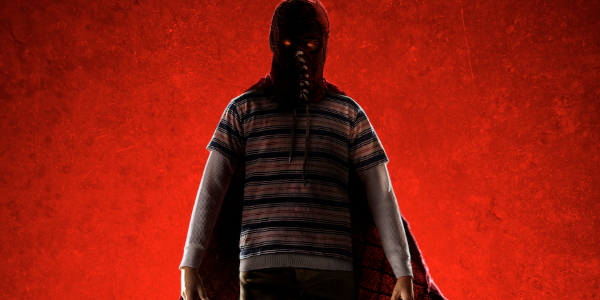
Brightburn in his full costume and hood

Warning: Spoilers for Brightburn are in play. If you haven’t seen the film yet, turn around before it’s too late, and come back once you’ve caught up.


When writers Brian and Mark Gunn’s Brightburn was first announced, it looked like a thrilling cross between Superman The Movie and The Omen was about to head our way. And sure enough, the David Yarovesky directed film played out just as we’d hoped it would, right down to its uber-bleak ending.


But there’s more to Brightburn’s finale than just what happened, as a mid-credits sequence opens the door to a wider world of havoc and mayhem. So we’d like to break down Brandon Bryer’s fate at the end of the film, and ask some questions about what it means and what the future could hold for Brightburn.


If you haven’t seen the film yet, this is your last chance to turn away before spoilers are in full effect. But if you’re ready to jump into the Brightburn fray, let’s start with talking about what the ending entailed.


The Ending To Brightburn


After an increasingly disturbing pattern of behavior, Brandon Bryer (Jackson A. Dunn) makes his full turn into becoming the superpowered villain he was seemingly always meant to be. Using his powers to intimidate and murder those who would try to make him answer for his deeds, Brandon eventually kills his parents.


He kill his father Kyle (David Denman) on what’s supposed to be a camping trip, but was secretly Kyle’s attempt at killing his son. Kyle tries to kill Brandon with a hunting rifle, but Brandon’s invulnerability sees him safe and sound. The son kills the father with his heat vision, and returns home just as his mother, Tori (Elizabeth Banks) accepts the fact that her adopted alien son is, in fact, evil.


Brandon returns home after Tori makes a call to Kyle, siding with him on the issue of their son’s villainy, which leads to Brandon’s greatest outburst. He destroys the family home, kills a couple of police officers, and eventually drops his mother from the sky after she tries to stab him with the only thing that could hurt him: the glass from the spaceship he crashed in.


Though he told his mother he wanted to do good, that’s no longer an option at the end of Brightburn, as we see Brandon Bryer wreck a commercial airliner to cover his tracks, and allow himself to go on to commit unspeakable acts. As the world starts to learn of his misdeeds, and his infamous reputation as a menacing force grows, he’s branded with a new name: Brightburn.


Could Brightburn Ever Become A Force For Good?


With Brandon becoming the all punishing villain at the heart of Brightburn’s super-powered universe, there’s still a question of whether he could become a force for good. As a young child, he’s still kind of in that phase where he doesn’t want anyone to tell him what to do, and seeing as he has the ability to use Superman-like powers with a moral code similar to Damien from The Omen, it’s a question that could pan out either way.


On one hand, Brandon could find himself mentored by someone down the road who could keep him in check. Maybe someone else out there will give him the patience and time that it needs to reform a child of his temperament, and humanity could be spared.


Then again, even Tori, his own mother, eventually turned to trying to kill her baby boy. So if your own mother tries to take you out, your position on your adopted species might be a little less than optimal.


It could be hard, but there’s always a slim possibility that Brandon/Brightburn could run into someone else that would change his worldview; but it all depends on how long he holds onto his superiority complex, and how long it’s allowed to grow unchecked by parental or societal figures.


Is There Really A Team Of Super Powered Villains/Heroes In The Brightburn Universe?


During the mid-credits sequence that sees Brightburn’s world turned upside-down by his heel turn, there’s a familiar face spouting conspiracy theories on the internet. He’s credited as a character known as “The Big T,” as played by Gunn family friend Michael Rooker. And in what looks like a rant in full-on meltdown mode, The Big T theorizes that Brandon might not be the only super in the Brightburn universe.


We see a quick glimpse of six supposedly super-powered menaces, and The Big T warns the audience that if they aren’t quickly dealt with, the world could be overtaken by them. While this feels like a natural setup for another entry in the Brightburn universe, there are two things that make this feel like this small moment is an extra bit of seasoning for this mid-credit roll.


First, one of the heroes in the six figure lineup happens to be Rainn Wilson’s Frank Darbo/Crimson Bolt from director James Gunn’s movie Super. While that movie set up its own problems for its central hero, having actual super powers and/or invulnerability was never in the cards. And seeing as he kind of owns the diner in the Brightburn universe, we’re not so sure he’s using that location as a hero base of sorts.


But the second, and more doubtful, proposition is the fact that Michael Rooker’s Big T comes off as an Alex Jones/InfoWars type personality, who really likes a conspiracy theory, but doesn’t provide a lot of evidence to support it. This isn’t a wholesale write-off of there being more supers in Brandon Bryer’s world, but until we see hard proof, we’re going to say that there’s no superteam awaiting the future of Brightburn. But it’d be kind of cool if there eventually was.


Where A Potential Brightburn Series Could Go From Here


There are several distinct paths that the Brightburn series could take from this point. The first of which is a possible super-villain team lead by Brandon Bryer. With Jackson A. Dunn’s ultimate bad seed being a creature of unknown planetary origin, there’s always a possibility that more like him are on this planet, waiting for a leader.


Of course, if Brian and Mark Gunn really wanted to go full Omen with their potential scripts for Brightburn sequels, we’d see Brandon wrestle with the quandary of being good versus being bad, ultimately siding fully and firmly on the villain’s side of the fence and trying to seize ultimate power. Which honestly, isn’t a bad option at all, because it’d be compelling to see a supervillain’s rise to power.


Ultimately, there’s no real limit to where Brightburn could go. The real question is which path the audience, and the creative team behind any hypothetical sequel, would find more rewarding. In which case, continuing the hybridization of The Omen and Superman franchises might be the best option; with the possibility of Brandon being adopted by a Lex Luthor-esque figure offering a hell of a sequel premise.


Seeing another Brightburn film would be a real reward, as this homage to two of director Richard Donner’s best films is a thrilling surprise at the summer box office. But it can’t remain a surprise if it wants to ever see another installment. Audiences attendance will be the key to whether or not Brandon Bryer’s story continues, and with Brightburn currently in theaters, we’ll have to wait to see if this evil is vanquished into cinematic obscurity, or allowed to flourish into something more menacing.


The 14 Best Horror Movies Based On A True Story

The 14 Best Horror Movies Based On A True Story
Annabelle of The Conjuring Universe was actually a possessed Raggedy Ann doll

I know what you're thinking: Horror movies that are "based on a true story" are bologna. Well, of course, Hollywood has a way of stretching the truth, especially when scaring audiences is involved, but that does not mean the claim is always a lie either.


Some of the best horror movies of all time have fact-based origins. For instance, the creepy child's plaything from Annabelle Comes Home, the latest upcoming entry in The Conjuring Universe, was inspired by an allegedly possessed Raggedy Ann doll. That is just the tip of the iceberg when it comes to art imitating bizarre, disturbing reality.


But of these films that sport the "inspired by true events" claim, which can also claim to be the best horror movies around? I have chosen 14 of some of the best films that made a scary movie-going experience out of a true disturbing event.


The Strangers (2008)


Let me clear this up for you right off the bat: No, The Strangers is not based on a specific, true story of a young married couple teasingly stalked and killed by masked assailants.


While many have speculated what famous murder cases could have inspired this gorefest starring Liv Tyler and Scott Speedman, director Bryan Bertino claims the inspiration was a group of mysterious strangers who knocked on the door of his childhood home in Texas, who turned out to be looking for empty houses to rob.


Bryan Bertino decided to flip that idea on its head by making the thieves masked serial killers and changing the purpose of their shocking, gory visit into, as what is now regarded as one of the best horror movie quotes in recent memory reveals, “because you were home.” So, it's based on a true story, perhaps just not what you would guess.


It does make sense that The Strangers is really just inspired by a plausible concept based on something that happened to the director, because I cannot imagine a trio of killers preying on two helpless victims in a cabin in the middle of nowhere taking that long to finish the job.


The Entity (1982)


In The Entity, single mother of four Carol Moran (Insidious star Barbara Hershey) is a victim of sexual assault. As if that could be any worse than it already is, her attacker is an invisible apparition of great evil and unstoppable strength.


Fusing a very real and prevelanet horrific crime with supernatural elements is creepy enough, but what makes the story of The Entity even more shocking is that it is inspired by the case of Doris Bither, who in 1974 claimed she suffered physical attacks from not one, but three ghosts that also attacked her children.


Without considering the bizarre origins of the story, The Entity remains a shocking and thought-provoking story, as the best horror movies tend to be, about a woman’s struggle to prove that the terrifying, violent offenses committed onto her are real.


Fire in the Sky (1993)


Say what you want about UFOs and alien abductions, according to Travis Walton, it happened to him.


The 1993 film Fire In The Sky is based on the memoir of the same name and recounts the most famous and best-documented alien abduction in history. In 1975, Arizona logger Travis Walton went missing for five days. When he returned, he claimed that he was taken by extraterrestrials.


D.B. Sweeney portrays Walton in the film, which does not take the concept of alien abduction lightly. It shows in graphic detail the torturous experience Walton alleges that he endured in traumatically graphic detail. It just barely earns its PG-13 rating.


The Girl Next Door (2007)


Not to be confused with the 2004 comedy about a high schooler in love with an adult film star, The Girl Next Door is based on Jack Ketchum’s novel, which was inspired by the tragic story of Sylvia Likens.


In 1965 in the state of Indiana, Likens was subjected to almost three months of abuse, neglect, humiliation, and torture by her sociopathic caregiver. She eventually succumbed to her injuries and died at just 16.


The events depicted in the The Girl Next Door are just as unsettling and unspeakable as the original shockingly sadistic case. While a fan of the genre would say that is a key point of acclaim for the best horror movies, I would say you may be better off reading about it than seeing it. It is not for the faint of heart.


The Amityville Horror (1979)


One of the most prolific cases of supernatural haunting comes from one now legendary house in New York.


It inspired the 1977 novel The Amityville Horror, which was made into a film two years later, starring James Brolin and Margot Kidder as George and Kathy Lutz, who find a great deal on a house after a man murdered his family in it years earlier. Soon, they begin to conspire that the crime was influenced by a demonic presence in the house and worry they will fall victim to it next.


While there is truth to the story of a man murdering his family in the infamous Amityville house, there is no real evidence to support an actual haunting occurred there. Yet, that has not stopped Hollywood for continuing to use the story as franchise material.


The original film, however, still pops into conversation as one of the best horror movies, mostly by those who still believe in its ghostly legend.


Child’s Play (1988)


Before there was Annabelle, there was Chucky. However, did you know that both of these fearful playthings are inspired by alleged fact?


In Child’s Play, regarded as one of the best horror films of all time, serial killer Charles Lee Ray (Brad Dourif) inserts his soul into a cute, red headed doll to continue his murderous tirade after death. The inspiration was a doll of unnerving design named Robert, owned by then six-year-old Gene Otto in 1906.


Robert the Doll was made for Gene by his family’s Bahamian servant, who happened to be skilled in voodoo. Her skills apparently proved effective as Robert would take enjoyment in taunting children and mutilating Gene’s other toys, among other unexplainable phenomena.


With the technophobic Child’s Play remake on the horizon, I now wonder what is scarier: stuffed doll possessed by evil or robotic doll with fatally faulty programming?


Wolf Creek (2005)


While Crocodile Dundee was a film that greatly helped the tourism industry in Australia, Greg McLean’s 2005 cult slasher film was the film that could have come close to ruining it.


Wolf Creek, about three travelers terrorized by a crazed pig hunter, claimed to be based on true events when first released. While not entirely a lie, the real Australia-based hitchhiker murders that inspired the film occurred far from the scenic national park the title borrows from… and misspells (Wolfe Creek).


Nevertheless, the film has earned acclaim as one of the best horror movies of its kind for its ultra realistic depictions of violence and, especially, for its sinister antagonist, Mick Taylor (John Jarratt).


The Conjuring (2013)


Famed paranormal investigators Ed and Lorraine Warren’s most famous case is, most likely, the case that inspired The Amityville Horror.


Of course, no confirmed evidence of that haunting exists (as I have mentioned) and the story has already been done to death in Hollywood. Thus, James Wan thankfully chose the Warrens’ 1971 investigation of the Perron Family’s house as inspiration for The Conjuring.


Featuring interviews with the actual Perron Family in the film’s marketing is what helped convince audiences to buy into its “based on a true story” claims and made it one of the highest-grossing horror movies of all time.


The Conjuring would spin off its own universe, which has gone on for some time. However, the one that started it all is still regarded as one of the best horror movies in recent memory.


A Nightmare on Elm Street (1984)


Wes Craven was smart to not market his slasher-fantasy hit as inspired by true events because no one would have believed that a badly burned, clawed, wisecracking boogeyman would be real.


That being said, claiming it to be based on true events still, technically, would not have been a lie.


Wes Craven wrote the script for A Nightmare on Elm Street after reading an L.A. Times article about a teenage boy suffering from nightmares that kept him desperate to stay awake, until he eventually died in his sleep.


Craven took the concept of a fatal nightmare, added villain Freddy Krueger (Robert Englund) as an antagonist, and one of the best horror movies of all time was born.


The Texas Chainsaw Massacre (1974)


A large part of the appeal of the late Tobe Hooper’s breakout hit was the claim in the marketing and in the film’s opening narration that the events depicted in the movie actually happened. No, there is no record of a massacre involving a chainsaw that took place in Texas in the early 1970s.


Instead, Tobe Hooper’s initial inspiration came from the cruel and gross crimes of Ed Gein, who has inspired several antagonists on film. Yet, Leatherface may be the killer’s most iconic cinematic counterpart due to his weapon of choice.


So, where did the chainsaw element in The Texas Chainsaw Massacre come from? Tobe Hooper and his wife were in a crowded department store when he saw the bladed tool on a shelf and thought to himself, I bet I could use that to get through this crowd a lot easier.


Jaws (1975)


Steven Spielberg’s masterful creature feature (and the first blockbuster) was inspired by Peter Benchley’s novel, Jaws. But even Benchley needed inspiration from somewhere.


Benchley stated in the introduction of his man vs. shark novel that his initial inspiration was a 1964 newspaper article about a fisherman who caught a 4,500-pound great white off Long Island. The story got him to wonder what would happen if such an animal became a more local nuisance.


Many also cite the infamous 1916 shark attack off of Jersey Shore. While the incident is mentioned in both the book and movie, Peter Benchley has said that the mere reference of the event should is not to be taken as a sign that it inspired the plot of Jaws.


Or, perhaps, he and Steven Spielberg would rather one of the best horror movies of all time, and one of their most iconic creations, not be linked to tragedy. That is quite challenging for a shark movie.


Psycho (1960)


Leatherface is not the only killer on our list to be inspired by Ed Gein. The prolific murdered also paved the way for Alfred Hitchcock’s most iconic creation.


Much like Norman Bates (Anthony Perkins’ bone chilling role in Psycho), Ed Gein was very close to his mother Augusta, who sealed him off from the rest of the world for much of his life. After she died, leaving him a state of crippling loneliness, he eventually began identifying as a woman, taking up cross dressing and skinning female victims to create a bodysuit to help assume his gender of choice.


All I can say, in regards to the life of Ed Gein AND the plot of Psycho, mothers, please be careful how you raise your children. They may end up inspiring some of the best horror movies of all time.


Nosferatu (1922)


You may recognize Count Orlok from Nosferatu by his brief cameo in a SpongeBob Squarepants episode, or by the name of his original source material: Bram Stoker’s Dracula.


Believe it or not, Count Dracula was an actual person: a Romanian prince named Vlad who took on the name Dracula, which meant “son of Dracul,” his father. Of course, he was Drac was not an undead creature of night, but he apparently did have a taste for human blood.


F.W. Murnau, unable to obtain the rights to the name Dracula, adapted Stoker’s novel into the 1922 silent film Nosferatu, which I still believe is one of the best horror of all time and my top pick for vampire movies.


The Exorcist (1973)


Director William Friedkin never regarded his Oscar-nominated adaptation of William Peter Blatty’s novel as a horror film, despite being regarded now as one of the best horror movies ever.


What interested Friedkin about The Exorcist, inspired by the actual exorcism of 14-year-old boy Roland Doe in a St. Louis hospital, was the unique opportunity he saw in it. He wanted to use the fictionalized take of the St. Louis possession (changed to a 12-year-old girl played by Linda Blair) and make a film that commented on the mystery of faith.


Perhaps that unique approach to the thriller, as well as its fact-based origin, is what has kept audiences intrigued and in fear more than 40 years since The Exorcist was first released.


What do you think of our list? Can you think of more horror movies "based on a true story" that deserve a spot? There are plenty more out there, but hopefully this provides a few for you to choose from.


Disneyland Mishap Prompts Boat Evacuation

Disneyland Mishap Prompts Boat Evacuation
Storybook Land Canal boats

If you're looking for a thrilling experience at the Disneyland Resort, I would suggest checking out Space Mountain or perhaps the Incredicoaster. However, earlier this week guests found themselves having an unexpectedly exciting time in probably the least likely of locations, Fantasyland. While the Storybook Land Canal Boats are traditionally a pretty relaxing attraction, that changed for about 10 guests, a combination of adults and children, as one of the boats began to take on water.


Nobody was injured during the incident and guests were transported from one boat to another before being transported to dry land. The attraction then went down for inspection. It has since resumed normal operation, so whatever the issue was, has apparently been cleared up.


It sounds like everybody made it through the ordeal without issue. The situation may have actually been a serious gain for the affected guests. According to the Orange County Register, affected guests were provided with dry clothes and shoes by Disneyland, which likely means they got some free park merchandise out of the deal.


The attraction takes guests on a slow boat ride past miniature versions of many classic Disney movie locations, like Toad Hall and Geppetto's Workshop. A guide drives the boat around while pointing out the tiny buildings and you get to sit back and rest your feet for a few minutes while checking out the intricate work on display. It's basically the Jungle Cruise, but without animitronics or jokes.


The ride was part of Disneyland's opening day in 1955 and has remained in operation ever since. Although, like the park itself, it sees regular replacements and updates. While potentially overlooked by some, the Storybook Land Canal Boats represent an important part of Disney history. Miniatures were a particular passion for Walt Disney and he once planned to create a traveling exhibition of Americana which he called Disneylandia. Eventually, the exhibition was deemed too costly an impractical, but many of the concepts behind Disneylandia were incorporated into Main Street U.S.A. and miniatures themselves became part of the Canal Boats attraction.


Usually, the most important thing to worry about on that ride is proper weight distribution on the boat, as it does need to be properly balanced for a smooth ride, but it's difficult to imagine that had anything to do with a boat actually taking on water.


It's good to know that everybody is ok and that there's nothing seriously wrong with the attraction. It may have been that one of the boats was simply in need of repair and that the problem had been missed on a previous inspection. Considering how few accidents, even of this relatively small size, take place at Disneyland, and considering how long the park has been around, the cast members clearly do an amazing job keeping things in working order.


Us Ending: What Happens And What It Means

Us Ending: What Happens And What It Means
Us Lupita N'yongo holding a weapon as she makes her way underground

Warning: Spoilers for Us are in play. If you haven't seen the film yet, you're going to want to bookmark this piece and come back after you've seen the film.


Everyone expected writer/director Jordan Peele's follow up to Get Out to be just as twisted, and just as deep, as his Academy Award-winning opus. But I don't think anyone would have expected just how hard Us decided to go when it comes to its end product. Like any good puzzle maker, Peele leaves a lot of clues and easter eggs throughout this film for the audience to put together. And the picture it reveals is something truly Biblical in scope.


Needless to say, if you haven't seen Us, you totally have to. Not only because it's a fantastic film that'll have you talking for days, but because what we're about to go into isn't going to make a lot of sense without that knowledge. So if you're planning on seeing the film, go do that now or whenever it's possible. Then come back, and dive into the deeper waters of the film's symbolism, as we're about to do now.


What Happens At The End Of Us


By time Us is ready to wrap up its narrative, we see Lupita Nyong'o's Adelaide, as well as her doppleganger Red (also Nyong'o), squaring off in an underground bunker. This confrontation comes after Red kidnaps Adelaide's son, Jason, and takes him into the bunker through an entrance in the maze that the two met at in 1986. Finding her way back underground, Adelaide is eventually given the entire story behind Red and the Tethered's existence.


As it turns out, the Tethered were an experiment in creating replicas of every human being in the surface world. An experiment that succeeded in physical copies, but as Red explains, fails in recapturing the souls of those copied. The project was eventually ditched, with the Tethered left to languish underground in their society of half-formed clones.


Eventually, this makes way for a sentiment of insurrection, with the Tethered world planning to surface and take their place in the sun. And leading the way is Red, the only clone with actual speech who's “different” from the rest. After this exposition is delivered, the two parties get into a fight, with Adelaide being the winner. Killing Red, she rescues Jason, and brings him back to the surface.


But as it turns out, Adelaide wasn't actually who she said she was. As it turns out, she was a Tethered who escaped, switching places with the real Adelaide back in 1986. So in actuality, Red was living Adelaide's life from that point forward, and vice versa. The only person that knows this besides her is Jason, who looks at his mother in horror before putting his mask back on. The film ends with a wide shot of the Tethered holding hands across America, with the news media covering the event through helicopter coverage. This is all pretty deep, but what does it mean exactly?


What It Means


Us feels like it's a film tackling that old socio-political saw best known as “the Haves, and the Have Nots.” In this case, everyone on the surface is a Have, while the Tethered are most definitely Have Nots. After decades of being confined underground, and being forced to live their lives unattended, uncared for, and impoverished, the Tethered are ready to mount an offensive and overthrow their surface-dwelling counterparts.


Now while we see a lot of the Tethered killing their surface-world counterparts, that doesn't look like it was their initial intent. We see beds made, with fresh jumpsuits and shoes in the underground bunker, so it feels like the initial plan would have been to simply supplant the surface world with their own numbers. But of course, there was resistance, it didn't work, and then the murders started.


Putting all of this together, Us is a story of revolt between the Haves and Have Nots, with the Have Nots trying to seize what they feel is rightfully there's. After being denied proper lives for so long, they hatch a plan to get into the mainstream and take over, all thanks to Adelaide being “special,” thus offering them a leader that could get the job done. If Red and Adelaide never switched, this may have never happened.


But looking deeper, Us also feels like a story of the political approaches and policies of the 1980s gone wrong; and their repercussions coming home to roost in the modern day. The entire story is one, big loop that spans from 1986 to the present day, with those created to be lesser than eventually taking over in one, apocalyptic gesture of dominance.


At the heart of it all though is a sentiment that any one of us is just a thin line away from being a Have or a Have Not. While we're all unique, it's the circumstances we're raised in that make us one or the other. Red was tired of being a person of the underground, so she switched places with Adelaide, and it wasn't too hard for her to fit in. As the film says through rather pointed, but understated dialogue, they're Americans. Looking through the hints scattered throughout Us, it's not hard to see this point being expertly sewn together throughout this slow burn narrative.


The Clues


Sifting through all the details that Jordan Peele slipped into Us, it's clear to see what's at work during the unfolding of the story. Even the detail that this film takes place between 1986 and 2019 is vital, as it's a 33 year story. Palindromes are a big symbol in the story that Peele is trying to tell, and there's a pretty huge one that recurs throughout: 11:11. In particular, there's a Bible verse that's attached to this numerical coincidence, Jeremiah 11:11, which says the following:


Therefore thus saith the Lord, Behold, I will bring evil upon them, which they shall not be able to escape; and though they shall cry unto me, I will not hearken unto them.


Now if that doesn't sound like a biblical reckoning, I don't know what does. The Tethered are that great evil, and judging by the gigantic red wall that's crossing the country, there is definitely no escape from them. But that's only the beginning, as the symbolism gets really political when you run back to the film's opening. A sequence where we're shown a TV spot for the “Hands Across America” initiative.


Meant to be a fundraiser to combat homelessness and hunger, the massive human chain of people holding hands raised money and awareness for those two causes that took up a lot of political real estate in the 80's. So much so that, as shown in another easter egg at the beginning of the film, they had already spawned a movie that spoke to the subject, with even more of a sci-fi/horror flavor.


Stashed right in frame, next to a copy of The Goonies, is a VHS of the cult classic C.H.U.D., a film that involved toxic waste storage mutating New York City's homeless population into cannibalistic humanoid underground dwellers. While the Tethered resurfacing in Us is more of a political statement, the creatures in C.H.U.D. were surfacing to feed on the surface world; but either way, the statement was that if we ignored the homeless problem long enough, it would come home to roost eventually.


Combining these clues gives you a story that, basically, tells us that if we keep ignoring our problems and disregarding our differences, they're going to come back to haunt us. And if we're not careful, that visitation will result in a reversal most foul. We can either be our greatest friends, or our worst enemies; and in the end, the decision is left to Us.


What other clues to the ultimate message did you spot in Us? Head to the comments section and clue us in! Get it?


Fantastic Beasts 3 Has An Official Release Date

Fantastic Beasts 3 Has An Official Release Date
Fantastic Beasts 2: The crimes Of Grindelwald

The Fantastic Beasts series hasn't been setting the box office on fire in quite the same way as the Harry Potter movies did before it, but that doesn't mean the series hasn't been making money or that it doesn't have fans looking forward to the next entry. Those fans waiting on an explanation of the bomb dropped at the end of The Crimes of Grindlewald will need to wait a bit longer, as the third entry in the franchise has been given an official release date of November 12, 2021.


This puts part three a bit behind the anticipated schedule, as the first two films came out two years apart, which would have resulted in Fantastic Beasts 3 coming out in November of 2020, instead, it will come out a full year later.


It was announced a few months ago that Fantastic Beasts 3 would not go into production this summer as previously scheduled, and would instead start filming in the fall. It seems that the quick turnaround between the first two films may be getting the blame for the second film's poorer performance, and it was decided the third film needed more time to prep.


The extra year of time could be for any number of reasons. However, we can be sure that the extra year isn't happening due to any significant retooling of the franchise's planned structure. The announcement of the date posted on Pottermore also confirms that the Fantastic Beasts franchise is still part of a five-film series.


There was some question as to whether or not we would still get all five announced films in the Fantastic Beasts series after the most recent movie, Fantastic Beasts: The Crimes of Grindlewald, became the lowest grossing movie in the entire Wizarding World franchise. It became the first movie to do less than $200 million domestically and the first to do less than $700 million globally.


Of course, "underperforming" for a Wizarding World movie is a relative term. The movie still did over $650 million globally and was a top 10 grossing movie in 2018. If your movie is doing worse than expected and is still making hundreds of millions of dollars, you've got a good problem on your hands.


Getting a movie that will need extensive post production digital effects done in 12 months or so was clearly deemed too fast, and so the film will have a longer than normal period to do post-production work.


While fans won't want to wait for another movie, the wait is the only negative to letting the next movie have more time. The more time all aspects of the movie have to do their best work, the better it will all be, and even the fans who wish the movie was coming faster will certainly be happier with a better movie, no matter how long it takes.


The biggest issue with the delay for Fantastic Beasts 3 may have nothing to do with it, and much more to do with Ezra Miller's long gestating Flash movie. It likely delays that movie even more, though it's also a Warner Bros. production, so the studio is clearly taking that into account. The fact that we haven';t heard anything about Flash going into production earlier than expected likely means it will be delayed even more.


November 12, 2021 was an empty weekend on the release calendar, and this time frame has largely been good to the Wizarding World movies over the years. There's currently an untitled Marvel movie set for the weekend before, but since we have no idea what Marvel has planned after this year, it's anybody's guess if that movie could cause box office concerns for Fantastic Beasts 3.


Fantastic Beasts: The Crimes of Grtindelwald revealed the character played by Ezra Miller to apparently be a lost Dumbledore sibling. How all of ithis is going to fit into the canon established by the Harry Potter movies we can only guess at this point, and fan theories will now have a little extra time to figure everything out.


6 Heath Ledger Stories That Show What Kind of Actor He Was

6 Heath Ledger Stories That Show What Kind of Actor He Was
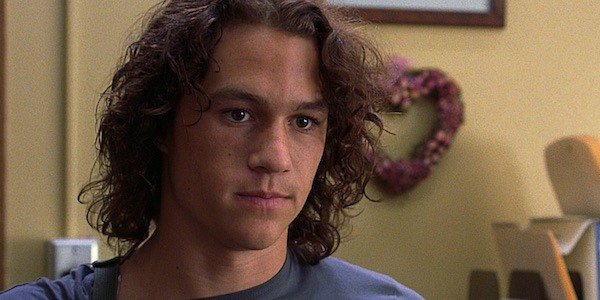
Heath Ledger in 10 Things I Hate About You

It's been more than a decade since Heath Ledger passed away and it's impossible to know where the actor would be in his career today if he were still alive. One of his last roles was as The Joker in The Dark Knight, and it went on to become the stuff of legends. People still talk about the effort that Ledger put into the character and how he delivered what's said by some to be one of the greatest performances of all time.


But Heath Ledger was in plenty of other movies before The Dark Knight, and by that point in his career, he had built up a reputation for himself as a serious-minded and very professional actor. He tackled each role by doing research and preparation, fully inhabiting whatever character he was playing. It was said that he locked himself away for a month to prepare for whatever part he was playing. As such, there are some memorable stories about his days on set and not all of them have to do with Joker. Here are six stories that remind us how great an actor Ledger was.


He Didn't Work For A Full Year To Avoid Typecasting


Heath Ledger's first Hollywood movie, 10 Things I Hate About You, introduced him to American audiences, where it didn't take long for people to fall for him as a teen heartthrob. He plays the steamy bad boy in the teen rom com, but Ledger wasn't interested in repeating himself. The only offers that were coming in after the film were for similar roles, so Ledger ended up refusing to work for an entire year until something different caught his eye. Looking back on his career, it was definitely something he succeeded at doing. He played everything from Bob Dylan to a stoner surfer dude to a Revolutionary War soldier to a clown-themed super villain. That's as varied a career as you can get.


He Kept A Joker Diary To Get Into Character


Heath Ledger turned down playing the title character in Batman Begins, but he was director Christopher Nolan's first and only choice to play the Joker in the sequel. Ledger signed on for the role before there was even a script, and part of how he prepared for the part was that he kept a diary of twisted images and things that he thought the Joker would find funny (AIDS was apparently one of them). Ledger wouldn't stay in character when not filming, so he would keep the diary with him and use it to get back into character before the cameras started rolling. Apparently, the actor was able to get into character quickly, and had no problem being chummy with the crew in-between takes (while he was still in full make-up and costume).


He Did All His Own Stunts In The Patriot


Tom Cruise doesn't own the monopoly for doing your own stunts. Case in point, Heath Ledger did all his own stunts for the Revolutionary War action-drama The Patriot. That means he handled stunts such as horseback riding, firing muskets, close-range combat and working with Mel Gibson all on his own. That's mighty impressive considering the movie had a heavy emphasis on action and could be pretty physically demanding; more than one tomahawk is thrown in this movie. One can only imagine the lengths Ledger went to while preparing for the non-combat scenes.


He Nearly Broke Jake Gyllenhaal's Nose Kissing Him So Hard


One of Heath Ledger's most significant and popular films is Brokeback Mountain, in which he and Jake Gyllenhaal star as cowboy lovers. In the movie, the two actors share a passionate kissing scene and reportedly, Ledger almost broke Gyllenhaal's nose because of how hard he was kissing. Additionally, he and Gyllenhaal would kiss off-screen for co-star Michelle Williams, who felt that it would help her get into character. Williams was dating Ledger in real-life at this point, so she felt watching him kiss someone else would really get her into her character's mindset.


He Asked Christian Bale To Punch Him In The Face For Real


The Dark Knight's interrogation scene is one of the most well-known in the movie, as Batman truly begins to realize the madness he's facing. The Joker isn't a foe he can just punch into submission because the more Batman beats him, the more he likes it. Heath Ledger was apparently getting into it, too. Christian Bale said that Ledger was egging him on to really punch him in the face, but Bale understandably wouldn't do it. After all, it looks just as good with a fake punch as it would with a real one. Bale commented that Ledger was so committed to the role, that he was cracking the tiles in the room because of how hard he was throwing himself around.


He Wore The Real Skip Engblom's Clothes For Lords Of Dogtown


In the film Lords of Dogtown, Heath Ledger plays Skip Engblom, the owner of a surf shop and promoter of a local skateboarding team in Venice Beach. To get into character, Engbolm's wife let Ledger wear some of her husband's clothes. Keep in mind that this movie took place in the '70s, so Ledger was wearing some authentically old and groovy clothes. Additionally, the real Skip originally wanted Ledger to play him in the movie and got his wish! And then the actor was wearing his clothes, so it was a double whammy.


It's sad to think that we'll never get another Heath Ledger performance, but the actor certainly left an impression on those he worked with in the short amount of time he was on this Earth. I doubt Christian Bale will ever forget that a man dressed as a psychotic clown asked him to punch him in the face as hard as he could. Based on comments from directors who worked with Ledger, he was a deeply observant and intelligent actor who throw himself fully into a wide range of roles. Ledger rarely repeated himself and it's safe to say that he avoided his fear of getting typecast. At least we have these memorable stories to remember a great talent.


All The Insane Deadpool 2 Cameos, Including Matt Damon

All The Insane Deadpool 2 Cameos, Including Matt Damon
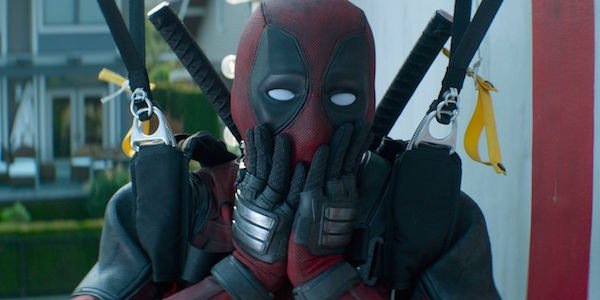
Ryan Reynolds - Deadpool 2

Thanks to his fourth wall-breaking antics and his encyclopedia knowledge of pop culture (both in the X-Men universe and outside of it), Deadpool is a perfect terrain for cameos, if you think about it. The character knows no reverence and he likes to keep people on their toes, particularly through his fast-moving mouth. In that spirit, when it came time to make Deadpool 2, the original film's staggering popularity paved the way for a smörgåsbord of surprise guest appearances, including a few you might've missed!


Therefore, we wanted to take this opportunity to break down all the surprise cameos that were found in 2018's superhero sequel. Because even upon first or second viewing, there's a possibility that you missed a few of the film's biggest and most shocking cameos in Deadpool 2. With that, we want to let you in on the scoop. And be sure to let us know if there are any we missed. Also, it should be a given, but some of these cameos require a spoiler or two. Just a heads-up if you haven't seen the movie.


Matt Damon As "Redneck #2"


There's a very good chance that you missed Matt Damon's cameo in Deadpool 2. The actor is genuinely unrecognizable in the superhero sequel, adopting very heavy make-up, including a prosthetic nose, a fake beard and a body suit with an extended beer gut to disguise his normally-ripped physique. Damon was also not officially officially credited either, adopting the one-time pseudonym of "Dickie Greenleaf" in the credits (a reference to Damon's 1999 film, The Talented Mr. Ripley). Nevertheless, the role of "Redneck #2" was played by none other than Matt Damon himself.


While his voice might've been a giveaway for some people, there are many folks who had no clue Matt Damon was in the film. In fact, there is a good chance that some of you didn't know until you read this article. There's no judgment here; until I started writing this article, I didn't even know myself! In any case, if you skip to the 32-minute mark exactly, you will see Matt Damon in a field, throwing back beers and talking rather extensively about toilet paper with his friend before a time-traveling Cable (Josh Brolin) walks up to their car, electrocutes them and drives away with their truck.


Brad Pitt As "Vanisher"


It's a blink-and-you-miss it cameo, but at the same time, there's a good chance that Brad Pitt's surprise three-second appearance in Deadpool 2 was the biggest cameo you caught in the movie. Throughout the film, the running gag with the invisible, silent character of Vanisher is that it's unclear if he actually exists or if he's just a bunch of empty space. But when the X-Force find themselves killed in increasingly graphic ways due to Deadpool's miscalculations with the wind, there is a brief moment where Vanisher's parachute is caught in the wind, causing him to be electrocuted, then burst into flames.


In that moment, which occurs 73 minutes into the film, we finally get a visible glance at Vanisher. And it's revealed to be none other than Brad Pitt. Because the cameo is so fast, there might be reason to believe that it's just a CG-ed version of the actor, but it appears that it was actually Brad Pitt. Somehow, the filmmakers found time in the A-lister's very busy schedule for the actor to make quick (but very memorable) appearance in the film.


James McAvoy As "Charles Xavier"


One of the best recurring jokes in the original Deadpool movie is the often-commented absence of actual X-Men in this X-Men property. There are only two other characters from the series who made appearances in that film, and Deadpool is often disgruntled by their non-appearances in his film. Sure enough, when it came time for the much-anticipated sequel, which was accompanied with a bigger budget and a higher profile release, there was the strong likelihood of at least a few well-known X-Men making an appearance. But their cameos needed to fit the style of the film, and the filmmakers wanted to honor the winking satire that is crucial to the film's irreverent success.


So, yes, Charles Xavier does make an appearance in Deadpool 2. However, Deadpool himself never gets to meet the character. 29 minutes into the sequel, while the title character is babbling on about the lack of X-Men found in the house, it's revealed that Charles Xavier and several other X-Men are indeed there, but they're intentionally avoiding contact with the foul-mouthed merchant. It's a single shot and another sequence where if you turn your head at the wrong time, you'll miss it entirely. But for the fans who were paying close attention, you got your chance to see several high-profile X-Men, even if Deadpool himself missed his chance to get acquainted.


Nicolas Hoult As "Beast"


Similar to James McAvoy's Professor X, Nicholas Hoult's Beast was also in the X-Men residence as Deadpool was ranting about the dearth of X-Men to be found in his movies. He was the one who was the closest to the sliding door and the one who heard Deadpool coming their way, as the Merc with a Mouth made his long-winded spiel about his movies making more money than the person who invented pants.


The blue mutant ultimately wasted no time trying to discreetly close the doors in the hopes that Deadpool wouldn't discover their appearance. And it seems like he did it successfully, as Deadpool was none the wiser about them being right beside him. Since he's in the center frame, there's a good chance you saw Beast. Nevertheless, it was a surprise — and welcome — cameo, even if Deadpool himself didn't know about it.


Evan Peters As "Quicksilver"


In addition to Beast and Professor X, Deadpool also missed his opportunity to meet Quicksilver. The scene-stealer was in the room with several other X-Men during the aforementioned cameo-filled sequence, and ironically he wasn't quick to close the door when Deadpool was threatening to find more X-Men in the residence. Nevertheless, while the cameo went by in a flash, Evan Peters was there. And gone.


Tye Sheridan As "Cyclops"


Tye Sheridan's Cyclops hasn't been seen much in the X-Men universe. Beyond his appearance in X-Men: Apocalypse, his character has otherwise been played by James Marsden in the first three movies. But we'll get a better chance at seeing Sheridan's take on the character when he appears in this summer's long-delayed Dark Phoenix. And in the meantime, he got a chance to play the role (in very brief fashion) during this cameo with his fellow X-Men in hiding.


Alexandra Shipp As "Storm"


Similar to Tye Sheridan, Alexandra Shipp has played her variation of Storm for only a brief window of time. But we'll see her take on a bigger role in this summer's X-Men: Dark Phoenix. And she made a cameo in Deadpool 2, smirking in the corner as Deadpool was trying to find his fellow X-Men.


Kodi-Smit McPhee As "Nightcrawler"


Much like his other two X-Men: Apocalypse co-stars, Kodi-Smit McPhee is still fairly newly acquainted to the X-Men universe. But he was among the X-Men seen (in hiding) during this memorable sequence in Deadpool 2.


Alan Tudyk as "Luke, i.e. Redneck #1"


Also in this scene, if a little more recognizable than his co-star Matt Damon, is Alan Tudyk. The actor is given less of a disguise (basically just a bandana) and he doesn't have as many lines as his scene partner. But he does get a name: Luke, though the shortly-seen character is also referred to as "Redneck #1." Considering that their on-screen conversation is filled with extensive potty humor, those numerals are probably intentional.


Luke, i.e. "Redneck #1," doesn't get as much to do in this cameo as his famous co-star. And considering that Alan Tudyk isn't as much of a household name as Matt Damon, that might not be surprising. Nevertheless, the cameo is certainly a fun one, and definitely an unexpected one, for fans of the veteran character actor and prominent voice actor.


Ryan Reynolds as "Juggernaut"


This one might not technically qualify as a cameo, since Juggeranut plays a prominent role in the third act. But there's a good chance that people do not know that in addition to his role as Wade Wilson/Deadpool, Reynolds also provided his voice to the role of Juggernaut. Making his first official appearance around 82 minutes into the film, Juggeranut becomes the final foe for which Deadpool must defeat. And it's hard for him to do so, not only due to his massive size and figure, but because Deadpool is constantly geeking out at the sight of such a titan in the comics.


While Juggernaut is typically a man of few words, he does speak from time to time throughout Deadpool 2, and when he does speak, his voice is lent by Ryan Reynolds in the surprise turn. Juggernaut was previously introductied into the X-Men movies in X-Men: The Last Stand. Much like Deadpool himself, he was given a second chance with Deadpool 2. So it's perhaps only fitting that Reynolds provided his voice to the oversized part as well.


Whew. There are all the big name cameos we caught in Deadpool 2. However, if you caught any other discreetly hidden cameos, feel free to let us know what is missing from our ranking in the comment section. And we'll be sure to keep you posted on all the latest movie news — X-Men related and otherwise — right here at CinemaBlend.