This Rotten Week: Predicting Avengers: Endgame Reviews

This Rotten Week: Predicting Avengers: Endgame Reviews
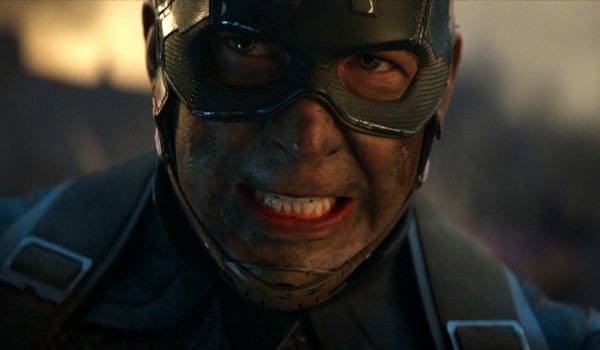
Captain America in Avengers: Endgame

It isn't often we get a movie with as much hype and star power as the one that comes out this week. It's the end of an era with the heroes of the Marvel Cinematic Universe getting one last chance to save the universe from the awful might of Thanos. Get ready for Avengers: Endgame.


Just remember, I'm not reviewing these movies, but rather predicting where they'll end up on the Tomatometer. Let's take a look at This Rotten Week has to offer.


Ever since the snap heard around the universe in Avengers: Infinity War, fans have been waiting to see how exactly this quest by Thanos would ultimately play itself out. Everyone knew immediately that the disintegration of half the Avengers into a fractal mist wouldn’t be the end of the story, but it has remained a mystery exactly how the titular team would solve the devastating crisis. Now it’s up to Captain America, Hulk, Black Widow, Thor, Hawkeye, Captain Marvel, Iron Man and a few others to right the wrongs by the Mad Titan, bring back their friends, and wrap up this era of the franchise. It looks awesome.


Rarely has a movie been met with so much anticipation, but this is a finale more than ten years in the making. Twenty-one movies after the release of the first Iron Man we get this spectacle, which looks to be a full realization of the vision Kevin Feige and company planned from the very start. It looks like it is set to be the franchise's biggest release yet, and if history is any indication, it should wind up doing quite well with critics.


Joe and Anthony Russo are back at the helm for Avengers: Endgame after previously directing Captain America: Winter Soldier (90%), Captain America: Civil War (91%), and Avengers: Infinity War (85%). It goes without saying that there's been a great number of fantastic directors helming Marvel Cinematic Universe features, but few if any have inspired the kind of awe and created the kind of spectacle that the Russos have.


Expanding to the rest of the franchise, the average Tomatometer score for the previous 21 releases is 83.9%. That in mind, I'm going to play the numbers and say that Avengers: Endgame winds up with an 84% - while at the same time expecting that the final score will actually be significantly higher.


What a week for the Rotten Watch. There were three movies in wind release, and I missed the Tomatometer score by a combined eight percent across all the projections. This is me patting myself on the back.


Penguins (Predicted: 89% Actual: 90%) may end up a direct hit when it’s all said and done. This was another big critical win for the DisneyNature franchise that just continues to pump out winners. Like I said last week, they just have a winning formula of super cute animals and stunning visuals.


Meanwhile, Breakthrough (Predicted: 61% Actual: 64%) is one of the rare, Christian-heavy films that actually ended up on the positive side with critics. Often the religious bent is just too heavy-handed to garner much critical support, but this is something of an outlier.


Finally, The Curse Of La Llorona (Predicted: 36% Actual: 32%) sucked as predicted. One could tell from the trailer that this latest chapter from in The Conjuring Universe just wasn’t bringing anything new to the table, and it seems that critics at large agreed.


Next time around we’ve got another interesting week with El Chicano, The Intruder, Long Shot, and Uglydolls. It’s gonna be a Rotten Week!


Brightburn Reviews Are In, Here’s What The Critics Think

Brightburn Reviews Are In, Here’s What The Critics Think
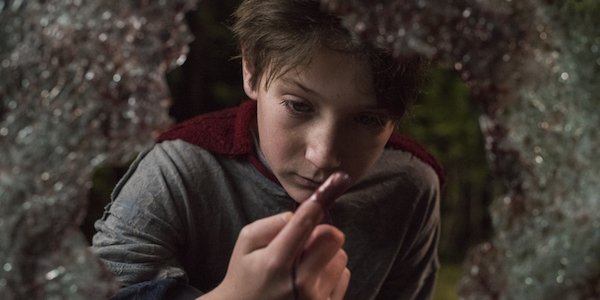
Jackson A. Dunn in Brightburn

The last several years have been good to superhero movies and horror movies, as those genres have delivered many cinematic offerings that have been met with critical and/or commercial success. This weekend, the two genres are being merged together for Brightburn, the twisted, R-rated story during by David Yarovesky and produced by James Gunn that shows what would happen if a Superman-like figure became a force for evil, using superpowers like super strength, flight and heat vision to wreak havoc on humanity.


With Brightburn only days away from release, reviews for the movie have started coming in, and it looks like it’s fallen into mixed territory, with some appreciating the story and others being underwhelmed by it. CinemaBlend’s own Eric Eisenberg gave Brightburn 4 out of 5 stars in his review, saying that it’s not filled with “big, complex contemplations,” but nonetheless succeeds in delivering a number of “fantastic shudder/scream-inducing sequences” and boasting a great cast.


Brightburn is ultimately a fine example of high-concept storytelling: taking an easily digestible idea, and exploring it to its full potential in compelling and entertaining fashion.


io9’s Germain Lussier wasn’t as kind towards Brightburn, writing in his review that although he would have watched a sequel right after Brightburn concluded, overall it’s a “poorly told story.” While Brightburn works within the horror genre structure in how it shows the young Brandon Beyer giving in to his dark impulses and some of the later payoffs and reveals are “satisfying,” the movie as a whole suffered from poor execution, which Lussier speculates might have been fixed had James Gunn directed.


Alas, Brightburn is a competent movie crafted out of incredible ideas. It’s gross, interesting, scary, and has fascinating mythology, all of which would be so much better if nearly all of it wasn’t delivered in such an obtuse way. Still, this is a story worth telling with characters we’d love to see again. Maybe next time, though, with a bit more care taken as to how the story is presented.


Back on the more positive end of the spectrum, Witney Seibold from IGN awarded Brightburn a 7.1 out of 10 score. Seibold noted that many of us have similarly deconstructed Superman, which might make the movie feel “weirdly familiar,” and that rather than providing dark commentary on how power corrupts, Brightburn plays out like a standard slasher, making for a “perfectly entertaining” experience.


… A wickedly fun little horror flick with enough gore and superhero lore to keep fans of both satisfied.


Conversely, The Wrap’s Robert Abele was disappointed by Brightburn, saying that its idea of showing an evil Superman isn’t enough to sustain an entire movie and will not please “either horror aficionados or even a caped-crusader fandom hungry for variations on the theme.” The main character is unremarkable and there's little weight to the actions his parents take when trying to stop his rampage.


But while we can perhaps be grateful that the superficiality of “Brightburn” probably kept it from opting to exploit elements of disturbed-kid narratives that have been all too common in our more tragic news stories, what remains is still never terribly entertaining as either popcorn or a bent take on superhero myths.


Chris Evangelista from Slashfilm was more receptive towards Brightburn, stamping a 7.5 out of 10 score on it and calling it a “bleak, brutal subversion of the Superman mythos” that works. As mentioned earlier, this isn’t a story where redemption is on the table, and Evangelista notes that there a “nihilistic streak” that reminded him of the Rob Zombie Halloween remake. While Elizabeth Banks’ part is “disappointingly underwritten,” it’s David Yarovesky’s direction that keeps Brightburn “flying high.”


Nasty is indeed the name of the game here – Brightburn is cold and unflinching, fully committed to unsettling its audience. It’s the type of movie that will make you thank your lucky stars that superheroes don’t really exist.


The AV Club’s Jesse Hassenger was among those underwhelmed by Brightburn, giving it a C- grade. In Hassenger’s opinion, the movie doesn’t have a “modicum of wit or insight on its human side,” resulting in Brandon’s parents being terribly predictable, and Brandon himself fails to be interesting. Ultimately, Hassenger saw Brightburn primarily as a dunk on Zack Snyder’s depiction of Superman in the DC Extended Universe.


For such a specific, clever-on-paper idea, Brightburn follows a shockingly predictable turn of events, possibly because it has few reference points beyond other pop-culture stories.


Finally, William Bibbiani from Bloody Disgusting bestowed Brightburn a 3.5 out of 5 score, calling it a “exceedingly clever genre mash-up,” albeit a gross one, both literally and figuratively. The movie also doesn’t feel quite “genuine,” and it’s Brandon’s parents that infuse a sense of humanity in the proceedings, but Bibbiani concludes that after watching Brightburn, you’ll be left wanting more, signifying franchise potential.


The film is, in the end, mostly just an ambitious slasher movie about a monster modeled loosely on Superman, and on that level it’s certainly a success. David Yarovesky makes an impressive impression with a film that walks a fine line between wry pop culture commentary and genuine terror, the cast is great and – perhaps most important of all – it leaves you wanting more. Much more. Sequels and sequels after sequels.


These are just some of the reviews out for Brightburn, so feel free to venture into other corners of the internet find out what other critics are saying. Overall, it sounds like Brightburn won’t be everybody’s cup of tea, but there are at least a scattering of moments for comic book and/or horror fans to enjoy.


Brightburn’s main cast includes Jackson A. Dunn, Elizabeth Banks, David Denman, Matt Jones, Meredith Hagner, Steve Agee and Becky Wahlstrom. The movie is already playing in various territories worldwide, but it’ll have some competition this weekend in the form of Disney’s live action Aladdin remake and the Olivia Wilde-directed Booksmart.


You can judge Brightburn for yourself starting this Friday, May 24, and stay tuned to CinemaBlend for more coverage on the movie. In the meantime, you can plan your visits to the theater for the rest of the year accordingly by checking out our 2019 release schedule.


Martin Lawrence Talks Making Bad Boys For Life Without Michael Bay

Martin Lawrence Talks Making Bad Boys For Life Without Michael Bay
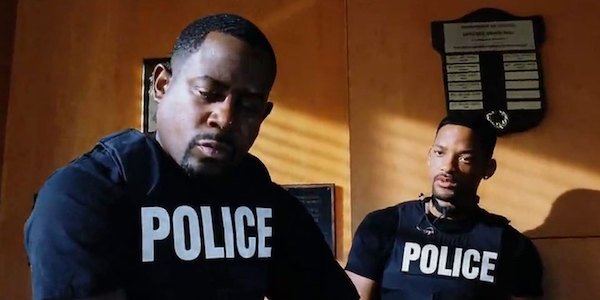
Martin Lawrence and Will Smith in Bad Boys II

The stars of the Bad Boys franchise, without question, are Will Smith and Martin Lawrence. Their chemistry and comedic interplay is what makes those movies stand out from the buddy-cop formula pack. But one could argue that the third “star” of those two movies was the director, Michael Bay. The bombastic Transformers director cut his teeth early on with the stripped down and streamlined Bad Boys, then kicked it up several notches to the expected Bay-hem with Bad Boys II.


Michael Bay will not return to helm 2020’s highly anticipated Bad Boys for Life. Those duties will fall to relative newcomers Adil El Arbi and Bilall Fallah. When we got a moment to speak with Martin Lawrence at the South By Southwest premiere of his new movie The Beach Bum, we asked Lawrence if it was strange doing a Bad Boys sequel without Bay, and he told us:


Well, it’s not so strange because Bilall and Adel are doing a great job. It’s just different directors, but we’re still going to bring you that Bad Boys stuff.


That begs the question, is it Bad Boys simply because Will Smith and Martin Lawrence are returning, or does the franchise actually need Michael Bay’s attitude and visual approach? We’re certainly eager to find out! Just last year, Paramount’s Bumblebee proved that a Bay franchise could survive the addition of a different director. But action franchises in the past have shown mixed results when they lose their original voice.


Die Hard, for example, usually floundered when original director John McTiernan wasn’t at the helm for a sequel. The Lethal Weapon franchise stayed steady with Richard Donner. And the best Terminator movies, so far, have had James Cameron in the director’s chair.


That’s not to say that co-directors Adil El Arbi and Bilall Fallah don’t have their own opinion on how to use Martin Lawrence and Will Smith in a Bad Boys movie. Clearly they had a pitch that sold Sony on their ability to get the gig directing Bad Boys For Life. And if Martin Lawrence is giving them the thumbs up for the work that they have done on the sequel so far, then we’re going to take him at his word.


We don’t know a ton about the plot details for Bad Boys For Life, but every once in a while, Will Smith posts an entertaining behind-the-scenes video on his YouTube page. Like this one:


Will Smith and Martin Lawrence will be reteaming for Bad Boys For Life, and the movie is due in theaters on January 17, 2020. Right now, there’s no Michael Bay, but Lawrence tells CinemaBlend that’s no problem. Do you agree with him? Let us know in the comments section below.


The Trick To Getting The Marvel Audience Excited For What’s Next, According To Joe Russo

The Trick To Getting The Marvel Audience Excited For What’s Next, According To Joe Russo
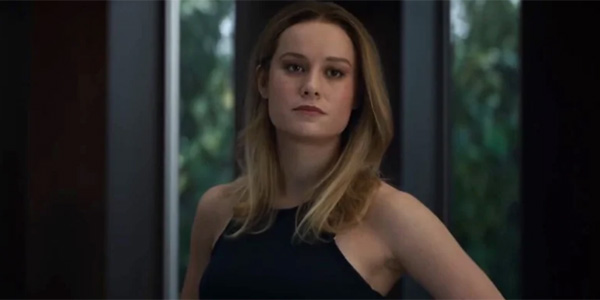
Captain Marvel in Avengers Endgame 2019

Modern blockbuster filmmaking can be tricky, particularly if you are working within the confines of a franchise. At a recent CinemaCon event featuring Elizabeth Banks, Anthony and Joe Russo, Dexter Fletcher and Olivia Wilde, the directors were talking about what the real trick is to keeping people excited for what’s coming next.


It was actually Elizabeth Banks who hit the nail on the head when she mentioned she makes sure “there’s a surprise built-in somewhere for the audience” particularly noting for people “who think they knew who this person was but there’s another layer, something more.”


Riffing off of Banks’ initial comments based on her work in Pitch Perfect 2 and Charlie’s Angels, Avengers: Endgame director Joe Russo revealed Banks hit the nail on the head. That is, in fact, exactly what he and Anthony Russo try to do to keep Marvel audiences excited. He elaborated:


I think that’s actually the critical kind of a something [Anthony] and I talk about all the time is that, in the age of social media the job of storyteller is to surprise because that’s what generates conversation. And I think just looking at the work we do on these Marvel films, the choices that we make, at the end of each film there’s something dramatic that happens to surprise the audience and then generates an incredible amount of excitement as they wait for the next movie.


At a CinemaCon luncheon, Joe Russo mentioned generating a conversation is key to keeping a narrative alive in the age of social media, but I also think this factor is important for keeping a conversation alive when there are more films coming in a franchise.


While Avengers: Endgame is being billed as the culmination of a 22-film narrative, certainly the Russo Brothers’ other films with Marvel have had to continue a through storyline in the franchise, and even Marvel as we know it won’t be just completely ending after Endgame. Instead, it'll likely just look a little different with a focus on different characters moving forward.


Joe Russo also admitted the whole goal is to start a conversation about what just happened so that the fans can engage with the storytelling as they wait for the next chapter.


They can discuss it and argue about it. It’s a really critical factor in modern storytelling, this notion of surprise.


I don’t think anywhere has this concept been clearer than in the final minutes in Avengers: Infinity War in which our heroes almost defeat Thanos only to lose. In those minutes, Marvel fans worldwide saw many of their heroes disappear into dust and it’s an idea and a surprise we’ve been chewing on for a year as we wait for Avengers: Endgame.


Luckily, that wait is nearly over. Avengers: Endgame will be out on April 26 and we’ve already seen a full scene from the upcoming film, which also dropped during CinemaCon this year.


Now, the only question is: What surprise will the Russo Brothers have in store for us this time?


Batman May Kill, But That Doesn’t Mean It Should Be The Norm

Batman May Kill, But That Doesn’t Mean It Should Be The Norm
Ben Affleck in Batman v Superman: Dawn of Justice

While it’s arguably the most polarizing entry in the DC Extended Universe, three years after its release, Batman v Superman: Dawn of Justice is still a popular topic of conversation in the comic book movie world, and its director, Zack Snyder, has helped with that. Just last month, Snyder screened Batman v Superman’s Ultimate Edition alongside his director’s cuts of Dawn of the Dead and Watchmen as the capper to a 3-day event, and during one of the Q&A sessions, Snyder hit back against those who criticized his choice to have Ben Affleck’s Batman kill, saying that those who have a problem with that should “wake the fuck up.” And he is right, Batman has killed people various times over the decades, but that fact doesn’t mean that it is or should be his normal course of action. Far from it, Gotham City’s Dark Knight is a more interesting character when he chooses not to kill, no matter what.


During Batman’s earliest comic book appearances, when he was written like the pulp characters popular at the time rather than a standard superhero, Batman had no issue dispensing lethal measures against the criminals he fought, like when he snapped a man’s neck while swinging on a rope. Starting in the 1940s, though, he adopted a no-kill policy, which was presumably done to make him more appropriate for younger readers. That no killing rule has stuck for the most part, though there are instances when Batman has taken a life, both in the main DC universe and in alternate continuity stories (not in The Dark Knight Returns, contrary to what some believe).


For the sake of this piece, let’s only focus on Batman’s movie appearances. Michael Keaton’s Batman had no issue with killing foes, as evidenced by when he blew up Ace Chemicals while people were still in it in Batman and when he attached a ticking bomb to a Red Triangle Gang member in Batman Returns. Val Kilmer and George Clooney’s respective Batmans had a slightly softer method with dealing with Gotham City’s superstitious and cowardly lot, but it wasn’t until Christopher Nolan’s Dark Knight trilogy rolled around that a cinematic Batman declared that he wouldn’t kill. However, that stance is muddied when considering that he let Ra’s al Ghul fall to his death in Batman Begins and drove straight into a trash truck in The Dark Knight that almost certainly crushed the Joker henchman driving it. By the time we get to Batman v Superman: Dawn of Justice, Ben Affleck’s Bruce Wayne, who has become more weary and cynical, has no issue with killing criminals, whether it’s by breaking their necks in a brawl or gunning them down in the Batmobile.


So yes, when it comes to movies, Batman has left a fair amount of bodies in his wake, but thanks to the Dark Knight trilogy, as well as various comic books, TV shows and direct-to-video movies, Batman is usually depicted as unwilling to kill criminals, no matter how heinous their crimes are. Why is this? The explanation changes depending on who’s writing the character, but my favorite explanation comes from the 2010 animated movie Batman: Under the Red Hood, adapted from the 2006 comic book story arc “Under the Hood.” When Jason Todd, who’s holding The Joker at gunpoint, questions if Batman’s moral code doesn’t allow for him to kill his arch-nemesis or if it would be too hard for him to cross that line, Batman responds:


No! God Almighty, no! It'd be too damned easy. All I've ever wanted to do is kill him. A day doesn't go by when I don't think about subjecting him to every horrendous torture he's dealt out to others and then... end him… But if I do that, if I allow myself to go down into that place, I'll never come back.


Jason Todd then points out that he’s not asking Batman to kill someone like Penguin, Scarecrow or Two-Face, only The Joker, but Batman refuses. No matter how much he hates Joker, no matter how many people the cackling crook has murdered, Batman just can’t cross that line. And frankly, Batman following that rule makes him a more compelling character because it’s an understandable flaw in his approach to fighting crime.


Despite having no superpowers, Batman is usually considered to be one of the most formidable heroes in the DC universe. Give him enough prep time, and he can win just about any battle, and he’s fought his way out of so many fantastical conflicts that he’s earned the nickname Bat-God among fans. But when you boil things down to basics, Batman is just a ‘regular’ man waging a war against Gotham City’s criminal underworld, sometimes alone, sometimes with partners. With Gotham City so infested with evil, Bruce Wayne’s life would be a lot easier if he didn’t bother throwing villains in Blackgate Prison or Arkham Asylum, and instead just eliminated them right off the bat (pun slightly intended), but he can’t. He’s incapable of doing that, for better or worse, adding extra drama to an already incredibly dramatic character.


Having watched his parents being murdered down in Crime Alley, Batman can’t bring himself to take the life of another. To do so would make him an executioner, and as much as he embraces darkness, Bruce won’t delve that deep into the shadows. He’s incapable of doing so, even if he comes close to at times (like when he threatened to kill Joker in Batman Beyond: Return of the Joker for turning Tim Drake into a mini-Clown Prince of Crime). It’s the same reason why he won’t use a gun; if he did that, he would become too much like the man who irreparably damaged his life and the evildoers he’s dedicated his life to thwarting, and he’s not willing to fall that far, even if it makes his ‘job’ significantly harder. Zack Snyder tossed all that out for Batman v Superman: Dawn of Justice, and while that decision makes sense if you’re looking at Batman fighting crime through a more practical lens, it conflicts with the spirit of the character that has developed over the years.


I’m not saying that all superheroes shouldn’t kill; The Punisher wouldn’t be who he is if he didn’t snuff out criminals, and it’s hard to believe that heroes like Captain America and Wonder Woman who have been in wars didn’t take any lives. I even understand Superman having to kill in rare instances, such as when he snapped General Zod’s neck in Man of Steel, another controversial DCEU decision. For Batman, though, killing flies in the face of his moral code. Sure there might be instances where he’s not able to save everyone, but to the best of his ability, he won’t have anyone die at his hands. Besides, if Batman went on a killing spree around Gotham City, that would destroy the already fragile relationship he has with Commissioner James Gordon and the Gotham City Police Department, and that would definitely be problematic for his mission.


Certainly one of the reasons superheroes have endured for so long is because different writers and artist have been able to interpret these characters differently, and change and development is integral to longevity. That said, there’s no denying that most characters have core traits and elements that need to be retained in traditional depictions, and while it’s up for debate whether Batman not killing is one of those things, the fact of the matter is that more often than not you’ll see him exercise restraint rather than execute his foes, even if the movies haven’t always followed this rule. It’s not necessarily the most realistic and logical approach to fighting crime, but hey, there’s a lot about Batman that doesn’t translate for real life, and yet we nonetheless still enjoy him 80 years after his introduction.


Let us know where you fall on the Batman kill debate in the comments below. We’ll see how Matt Reeves handles the character when The Batman is released on June 25, 2021.


Every X-Men Movie Ranked, Including Deadpool 2

Every X-Men Movie Ranked, Including Deadpool 2
Masked Wade Wilson in Deadpool 2

The X-Men franchise is starting to wind down… well, at least in its current form. 2017 delivered Logan, Hugh Jackman’s final outing as Wolverine, and 2018 gave us Deadpool 2, another successful outing of Ryan Reynolds as a proper, fourth wall-breaking Wade Wilson. Looking to the future, Dark Phoenix will wrap up the main X-Men film series soon, and following numerous delays, The New Mutants is finally set for release on April 3, 2020, although it’s entirely possible it could be moved again.


With the X-Men property now under the Disney banner following the company’s purchase of 21st Century Fox, it’s only a matter of time before Marvel’s mutants are eventually going to be incorporated into the Marvel Cinematic Universe mythology, though that’s a long way off. In any case, the current X-Men franchise has unquestionably been a major cornerstone for the superhero movie genre’s rise in popularity in the last two decades.


So as we prepare for Dark Phoenix and The New Mutants to bring an end to this iteration of the current X-Men franchise, here's our ranking of all the X-Men movies up to this latest installment, from worst to best. Let's kick off with the one that most of you likely look at with contempt and sadness.


X-Men Origins: Wolverine


X-Men Origins: Wolverine promised to tell the epic tale of how Wolverine's skeleton was bonded with adamantium and how he lost his memories. Well, at least we got the origin part. With the exception of Hugh Jackman delivering a satisfiable Wolverine performance, Liev Schrieber's improved Sabretooth and the amazing opening credits, nothing about this movie screamed excellence.


Origins felt like a weird offshoot of a regular X-Men movie than a true Wolverine story. In some ways it actually made Wolverine seem less interesting. It's for the best this movie was wiped from continuity after X-Men: Days of Future Past.


X-Men: The Last Stand


X-Men: The Last Stand is a perfect example of a movie that juggles too many plots and characters. Instead of following both Jean Grey's transformation into Dark Phoenix and the creation of a mutant "cure," the third X-Men entry should have dedicated full attention to just one of these narratives. Even if that had been the case, that may not have been enough to shift The Last Stand from a mere action-fest to something compelling.


The treatment of certain fan favorite characters (I'm looking at you, Cyclops and Juggernaut) certainly didn't help matters. The Last Stand did have a few bright spots, like Kelsey Grammer's Beast, but overall, it was an underwhelming conclusion to the original X-Men trilogy, making us all the more glad the series didn't end with that.


X-Men: Apocalypse


If X-Men: Apocalypse had come out 10-15 years earlier, then maybe it would have earned better reception. The problem with this installment is not only did it hit on many of the same beats we've seen in previous X-Men movies, but the story just felt incredibly generic. It takes more for a superhero movie to be successful nowadays than just showing the hero(es) preventing the bad guy(s) from taking over the world, unleashing destruction, etc.


Apocalypse barely brought anything special to the table plot-wise, especially with the main villain. So while it's an okay movie overall, there's nothing particularly exceptional about it. Except for that Quicksilver sequence. That's a delight to watch.


The Wolverine


Four years after X-Men Origins: Wolverine failed to satisfy critically, The Wolverine managed to find some solo story redemption for the clawed mutant by taking him to Japan, a location near and dear to his comic book counterpart. The first two-thirds of the movie were a blast, as we saw Wolverine fighting the Yakuza while he dealt with his malfunctioning healing factor.


The movie also arguably showed Wolverine at his highest level of ferocity up to that point in the franchise. Unfortunately, The Wolverine's clunky third act was a little too weighed down in the more fantastical comic book elements, but in the end, it was a decent adventure for Logan.


X-Men


It's the movie that started it all, and even though Blade preceded X-Men by two years, many will argue that the latter helped kick off the modern superhero movie craze. Introducing folks who didn't read the comics or watch the '90s animated series to the world of mutants, X-Men was an action-packed romp that also explored how discrimination has affected those born with extraordinary abilities.


At a time when a lot of superhero movies weren't taking themselves seriously, X-Men was a welcome break since it didn't seek to make light of the source material. Sure, X-Men didn't fully embrace its comic book roots (as evidenced by those black leather costumes), but we'll forever be grateful for its captivating story and what it did for the superhero movie genre.


Deadpool 2


There was a lot riding on Deadpool 2 to come close to matching its predecessor’s excellent blend of action and wackiness, and while it might not entirely measure up, the sequel is definitely still enjoyable. Along with delivering more of the elements we enjoyed in Deadpool, Deadpool 2 explored the concept of family and Deadpool ultimately finding a place where he belongs.


The movie also introduced us to Josh Brolin’s Cable and Zazie Beetz’s Domino, and while it remains to be seen whether we’ll ever see this incarnation of the X-Force again, at least these versions of the characters had one movie to shine in. It should also be noted that along with the theatrical cut, fans can also watch Deadpool 2 unfold differently in the Super Duper extended cut and the PG-13 cut known as Once Upon a Deadpool.


X-Men: First Class


Taking a cue from X-Men Origins: Wolverine, the main X-Men series decided to wind the clock back to the early 1960s to show how Professor X and Magneto first met each other, and how the very first team of mutant heroes formed. It's a good thing the franchise went in this direction, because thanks to X-Men: First Class, the series was revitalized.


With a story that mixed superheroes flair with spy adventures, good performances from most of the main cast and great dialogue, X-Men: First Class benefitted from getting distance from its predecessors, and the end result was a movie that was both exciting and intelligent.


Deadpool


Deadpool is very much the black sheep of the X-Men franchise, in that it doesn't feel like an X-Men movie at all. Hence why it's not in the top 3 on this list. Nevertheless, given Deadpool's connection to the X-Men universe, as well as the movie include Negasonic Teenage Warhead and Colossus, we must include it! That's perfectly fine, because Deadpool was unlike any X-Men or superhero movie that came before.


With zany humor, fourth wall breaking and over-the-top violence, Deadpool is a great example of what happens when you take a risk with a property and it pays off big time. We should all be thankful to whoever leaked that animated test footage and forced Deadpool out of development hell.


X-Men: Days of Future Past


Loosely adapting the original 1981 Days of Future Past comic arc, X-Men: Days of Future Past was the movie that brought the old and new X-Men generations together through time travel. As both a continuation of the original trilogy and the next entry of the "First Class" trilogy, this movie managed to combine the best of both worlds for an epic and entertaining tale that spanned across decades.


A great bonus that came from the temporal shenanigans is that much of the X-Men franchise's continuity issues (and mistakes) were wiped away when the timeline was changed, leaving the franchise a relatively clean slate to work with for future entries.


Logan


Like Deadpool, Logan was unlike any other superhero movie that came before. In this case, Wolverine's third movie felt more like a modern Western, and it is arguably the maturest of the X-Men movies. While the cinematic Wolverine has usually been a captivating protagonist to watch, Logan cut to his core and arguably spotlighted him when he was most "human."


By eschewing many of the comic book-y elements in favor of character study and putting both Wolverine and Professor X in their most vulnerable states, Logan served as a remarkable conclusion to both Hugh Jackman and Patrick Stewart's time with this franchise, and will forever be known as one of the most unique tales in this genre.


X2: X-Men United


Obviously the rankings on this list are subject to debate, but there's no denying that X2: X-Men United is the movie from this selection that best melded the X-Men mythology with a story appealing for all kinds of moviegoers. Even though Wolverine was once again front and center as he encountered a figure from his past, all of the major characters were able to shine at one point or another.


While the action was as dazzling as ever, it was also great to see X2 hit even harder on those outcast themes. This was one of those rare sequels that improved upon its predecessor and then some. While it's a shame that X2's immediate successors failed to measure up, they can't take away from how fantastic this installment is, and it still reigns supreme as one of the most acclaimed superhero movies ever.

Jeremy Renner Keeps Showing Love For The Original Six Before Avengers: Endgame

Jeremy Renner Keeps Showing Love For The Original Six Before Avengers: Endgame

While there were many surprising decisions at the end of Avengers: Infinity War as far as which heroes we lost and which ones survived, there was one very clear pattern that emerged. All five of the characters who made up the original Avengers survived. While the exact fate of Jeremy Renner's Hawkeye was unknown at the time, this pattern (and the fact we knew Renner had filmed scenes for something for the two Avengers movies) led many to believe Hawkeye had lived, something which has since been confirmed. In the lead up to Avengers: Endgame, Renner appears quite focused on his original co-stars, as he has continued to share pictures to Instagram focusing on these six heroes.


A few days ago Jeremy Renner shared the six character posters of the original Avengers team that were released as part of the 'Avenge the Fallen" series. He also gave a shout out to his "A6" on Instagram. While there are several other characters who will certainly play important parts in Avengers: Endgame, one certainly believes these six characters will still be the ones at the center of it all. The Marvel Cinematic Universe really took off with the original Avengers film, and Endgame is expected to be something of a conclusion.


And of course, Jeremy Renner knows some things that we don't. While we expect that Endgame will likely be the final MCU movie for Robert Downey Jr. and Chris Evans, and possibly others, Renner would, one assumes, know for sure if that's the case. He not only knows if they're leaving, but assuming they are, he knows how it will happen in the film. It could be part of the reason he's celebrating his old friends, because this is his last chance to do so in this context.


It's not all super serious, however. Before sharing the picture of all six Avengers looking focused and committed, he shared a very different picture, showing the six Avengers actors being silly and ridiculous. Check it out.


Of course, while most of the focus is on the big names of Downey and Evans, we don't really know what the future holds for the other four actors either. We know a movie based on Black Widow is on the way, but that one is expected to be a prequel, so that doesn't mean that character is any safer. The Avengers will likely move forward, but they will almost certainly look very different when they do. Just which of these six characters will we see again, and which will we be saying goodbye to for a final time?


Is Renner being nostalgic because he's one of the people going away? Who knows. I certainly won't be happy to see any of these six characters go.