Brad Pitt And Edward Norton Talk Fight Club Getting Booed In Early Screenings

Brad Pitt And Edward Norton Talk Fight Club Getting Booed In Early Screenings
Fight Club

Today, David Fincher’s Fight Club is considered a true cult classic, one of the director’s best movies and one of the most enduring titles of the banner year that was 1999. But 20 years ago, when the movie was first coming out, that level of adoration and appreciation was much more difficult to find. The film was a box office flop and was critically lambasted in some corners, for being irresponsible and deplorable. It was even booed.


Fight Club premiered in September of 1999 at the Venice Film Festival and in an excerpt from Brian Raftery’s book Best. Movie. Year. Ever. on The Ringer, Brad Pitt recalls the reaction to that early screening:


It gets to one of Helena’s scandalous lines—‘I haven’t been fucked like that since grade school!’—and literally the guy running the festival got up and left. Edward and I were still the only ones laughing. You could hear two idiots up in the balcony cackling through the whole thing.


What an amusing image that is, a crowd of aghast and offended festivalgoers watching Fight Club for the first time while Brad Pitt and Edward Norton are cracking up like teenagers, enjoying every second of the film and finding it hilarious.


The audience at Fight Club’s premiere clearly did not see the satire in Fight Club or find any humor in it, especially when it comes to Helena Bonham Carter’s most notorious line as Marla Singer. The line was so offensive that the person running the festival decided he had seen enough and decided to leave.


What’s particularly ironic about that is that her scandalous line was actually the result of the original line being considered too offensive and alienating by one of the film’s producers, Laura Ziskin. The original line in the script is the same as in Chuck Palahniuk’s book; after sex Marla turns to Tyler and says ‘I want to have your abortion.’ As retold by The Wrap, Ziskin begged David Fincher to take the abortion line out and the grade school line is what replaced it.


That line may or may not be more offensive, but either way, it didn’t play well, nor did the film overall, as Edward Norton recalled:


It got booed. It wasn’t playing well at all. Brad turns and looks at me says, ‘That’s the best movie I’m ever gonna be in.’ He was so happy.


You occasionally hear stories about films getting booed at festivals, and it ascribes a scarlet letter of sorts to the movie, branding it as something terrible, indecent or both. That a more prudish audience might boo Fight Club is one thing, but a festival attended by adherents of the art from is something wild to consider. Still, no amount of boos were going to rain on Brad Pitt’s parade.


As Edward Norton recalled, Brad Pitt was positively cheery, thrilled with the film itself, regardless of how it was received. Whether it wound up really being the best movie he’s ever been in is up for debate, but it is definitely a career highlight.


For Edward Norton, the hostile response Fight Club received at those early screenings from critics and audiences was something of a defensive response to the messages in the film itself. He said:


I think the establishment, the critical culture, felt a little bit indicted by it. So they responded to it with a little bit more seriousness, and I think they missed the satirical edge of it.


The subversive, anti-establishment message espoused by Tyler Durden in Fight Club was viewed as a dangerous and irresponsible thing to be in a Hollywood film. And rather than take a nuanced look at the satirical nature of the story, the response was to condemn it. It should also be noted that Fight Club came out the same year as the Columbine Shooting happened, so like The Matrix, it also arrived at an inopportune time and was an easy scapegoat and example of the things that caused society’s ills.


The people involved knew that Fight Club was going to have an uphill battle in the public eye, so two days before its opening, Fox Filmed Entertainment Chairman at the time Bill Mechanic let David Fincher know what to expect. He said:


I said there would be two judgments in the movie. One would be on Friday—which I wasn’t so sure about. But there was also the judgment of history. And I thought this would be one of the great films of the decade. So I was fine to take the pummeling.


Bill Mechanic proved prescient in his thoughts. Fight Club was judged a failure when it opened, managing just $11 million in its opening weekend. Yet as predicted, history judged David Fincher’s film far kinder. Fight Club is now a classic and indeed one of the great films of the decade. Sometimes faith in a film is rewarded, but those rewards don’t always come when you expect them. From booed and walked out on to cult classic; Jack’s smirking revenge indeed.


Check out our 2019 Release Schedule for all the films coming to theaters this year.


Why The Wild Us Theory About The Son Is Probably Wrong

Why The Wild Us Theory About The Son Is Probably Wrong
Us Jason and Pluto compare hands in the closet

Warning: spoilers for Us are in play. If you, or your tethered haven't seen the film yet, please bookmark this article, and come back once you've caught up.


You knew this was coming. Whenever a movie like Jordan Peele's Us storms theaters, there are going to be reactions, theories, hot takes, and think pieces dissecting the film's many meanings -- and that's not necessarily a bad thing. A movie such as Us is always going to generate a lot of thought, and tons of opinions as to what's been presented. For example, there's a theory involving the son of the family, played by Evan Alex, and it makes a pretty big implication about his character. Take this as your last warning for spoiler country, as we're about to jump into just what this theory entails, and why it's probably wrong.


The Theory About Jason


First, Young Jason, son to Adelaide and Gabe and brother to Zora, has been theorized to have switched places with his Tethered doppelganger, Pluto. Fans feel that during the events of Us, there was somehow a switch that allowed Pluto to become a secret part of the Wilson family, and the look of understanding with Adelaide, a known underground dweller who swapped places with her surface counterpart, was one of collusion.


Previously, we had already seen a switch between Lupita N'yongo's Adelaide and Red happen during their childhood years, and taking into account the fact that Jason is the only other family member to go into that underground bunker besides his own mother, there's definitely enough material to raise the question. Furthermore, there are a couple of instances where folks may believe that's exactly what the movie is trying to tell them. But does it make sense?


What Led To This Theory


There are two pieces of information that have people thinking Jason and Pluto somehow swapped places, and they're valid concerns. The first supposed clue is, obviously, the fact that Jason and Pluto spend an extended amount of time in the closet of the Wilson family beach house in Us. If you had two characters who look almost identical trapped in a room for a long period, with no one observing them, you wouldn't be wrong to think that maybe a swap had taken place.


But it's the second piece of information that's probably triggering audiences the most. Towards the end of Us, there's a moment where Jason looks at Adelaide with a face of fear and understanding. In that moment, it's presumed that he knows the entire truth about the swap with her surface doppelganger, and her assumption of her identity. Whatever the case, Jason knows something's off, and rather than freak out, he slips his mask back on and stays silent.


There's a case to be made regarding why this theory could be true. Us is the sort of movie that will  lay out the details it has to in order to tell the story, but also doesn' lock them in so tight they can't be interpreted another way. There's enough room for theories, but after really digging into what was shown in the film, as well as piecing together some key details, I believe the theory that Jason and Pluto switched places by the end of the movie is indeed false. While Jason best understands the Tethered, catching on quickly as to who they are and being able to interact with his doppelganger in a meaningful way, he's not one of them.


Why The Son Theory Is Probably Wrong


There are just too many pieces of supporting evidence scattered throughout Us that dictate Jason and Pluto have not switched places. Starting on the surface level, the fact that Jason still has normal speech is an important clue to his true identity. Pluto wouldn't have that sort of capability yet, because as we saw with Adelaide/Red, it takes time for a Tethered to learn how to speak like a normal person. Red couldn't have taught him in that short of a time, and even if she could, Pluto's English wouldn't be passable enough for him to seamlessly integrate into the family. Even with her ability to speak better than the rest of the tethered, Red's speech pattern was altered into a sort of hybrid between surface and Tethered.


While we're on the subject of Red, as we know in her recitation at the Wilson home, her children are monsters that even she has issues with. One of the main points of the narrative thrust in Us is that she wants what Adelaide has, and that includes her family. Red wouldn't have taken Jason if he were Pluto, and his kidnapping takes place right after Pluto incinerates himself in the car fire, with just one child left in play. This is another logistical hurdle the film just doesn't clear to support Pluto being the kid going home at the end.


Most importantly, Pluto has extensive facial scarring, undoubtedly a consequence of his pyromaniacal tendencies. Unless the Tethered have a really good plastic surgeon that can get the job done in an afternoon, or possess some sort of makeup that can erase that sort of scarring very easily, there's no way that Pluto and Jason have done a quick switcharoo. It's this last fact in particular that supports Jason just being himself, able to interact and understand the Tethered best in his family, but ultimately debunking theories that he himself has been swapped out.


Over time, there's always the possibility there are clues in Us that will surface to either reinforce or reexamine the theory that Jason was really swapped for Pluto. Based on the evidence currently observed, I do not think that is the case. That said, if more supporting arguments emerge to support that suggestion, and they pan out, I honestly wouldn't be mad. If Jason and Pluto somehow took a page out of the Prince and the Pauper playbook, it'd be the ultimate statement in Jordan Peele's examination of class warfare by means of infiltration. It'd also be extremely chilling, because then the question of whether we really know the ones we love would be raised with a rather effective exclamation point. For now though, let's consider that theory sent back underground, because it has no place here.


I Watched The Original Pet Sematary For The First Time And Yes, It's In Need Of A Remake

I Watched The Original Pet Sematary For The First Time And Yes, It's In Need Of A Remake
Stephen King's Pet Sematary 1989

Spoiler Warning: I ruin key plot points in the book, 1989 movie, and probably the new movie, so proceed with caution!


Before IT Chapter 2 arrives in theaters later this year, another highly anticipated Stephen King adaptation is hitting screens. Pet Sematary is set to retell the tale of the Creed family, a family which moves to a rural town in Maine and discovers a mystical (and cursed) pet cemetery on their property. It's one of King's most popular books, but I had never read it. Nor had I watched the original film. With the early word on the street that the new film from co-directors Kevin Kolsch and Dennis Widmyer absolutely rules, I figured now was a great time to read the book and watch the original 1989 movie.


After watching the film last weekend, I decided that, yes, this thing was due for a remake.


The original Pet Sematary movie was directed by Mary Lambert and written by Stephen King himself. I had always heard positive things about the movie, and I was excited to watch it in preparation for the new film. Why did I do this? Probably so I could say "that's not how they did it in the book," and annoy all the people around me. Regardless, I loved the book, and Hulu made it easy for watch the original movie; however, it was not what I was expecting.


A few things I should point out before diving in: While the movie was pretty faithful to the book, watching for the first time, it falls short in some key areas like acting and pacing. Maybe I've just been spoiled by too many good horror films these past couple of years, but I had a hard time getting onboard this movie.


However, it's totally true that I am coming from a different experience than those who grew up watching the movie and I can see this being pretty scary if you were a kid in 1989 when the movie originally hit theaters. There is legitimately one scary scene involving a character named Zelda that unnerved me deeply. What scares audiences changes over time as well, and that could be one of the reasons watching for the first time now made me happy Pet Sematary is being remade. For me, most of the film ended up having a strong cheesy vibe that makes it more fun to watch than scary, but I obviously don't think that was the intention of the filmmakers.


Regardless of how dear some might hold the film, I think we can agree that the acting is not so great in this movie. It stars Dale Midkiff as Louis Creed, Denise Crosby as Rachel Creed, and Fred Gwynne as Jud Crandall. Gwyne is the best of the bunch and although his Maine accent makes it difficult to decipher what he's saying, he's still the strongest actor in the film. Unfortunately, Midkiff really bogs the movie down.


He reads almost every line with this monotone that makes it impossible to decipher what his character is actually feeling. There's a point in this movie where Louis is supposed to go insane, but Midkoff delivers dialogue the same way as before. You'd think having brought your dead son back from the dead only for him to murder your best friend and wife would have some impact on you.


Another issue I personally had sort of relates to having read the book. The pace is obviously faster, because when adapting a book to a movie, changes have to be made to streamline the plot. The problem I had with how Pet Sematary does it is that it drains the film of character and it's harder to discern why anyone is doing anything.


The perfect example is how the movie handles Jud Crandall, the Creed's elderly next door neighbor. In the book, Jud becomes Louis' best friend. They hang out on a regular basis, just kicking back and drinking beer. Jud also has a wife named Norma, whose life Louis saves after she has a nasty spill on Halloween. Because Louis saved his wife, Jud decides to pay him back by showing him the Micmac burial ground when Louis' family cat Church dies.


In the movie, Jud and Louis have a small handful of scenes together before Church has his inevitable meeting with a speeding truck and Jud shows the burial ground... just because? He pays some lip service later that he didn't want Louis' daughter to be sad, but it rings hollow -- especially because the movie's burial ground produces more violent animals than the book's did.


Norma was understandably cut from the movie (likely to keep the runtime and budget down), but without that extra motivation Jud doesn't really have much of an excuse to teach someone how to make zombies. In the book, Jud's decision isn't entirely his own because he's being influenced by the burial ground, but you still need that motivation to further justify the moment.


As an adaptation goes, Pet Sematary is generally pretty loyal to the book. It cuts back on certain supernatural elements, but otherwise it follows the book to a tee. However, that's not always a great thing and one thing should have absolutely been changed: Gage.


In Pet Sematary, Gage is Louis' toddler son who is tragically run over by a truck. He is eventually brought back to life by a desperate and grieving Louis to disastrous results. The movie keeps all this, but here's the thing about a two year old killer: it's adorable.


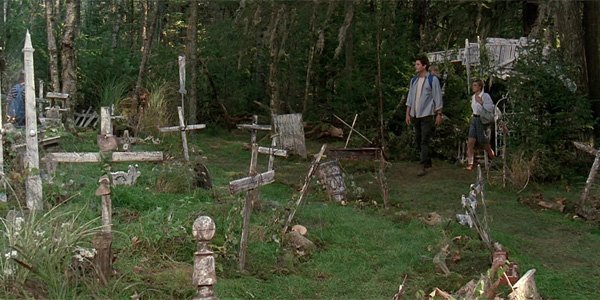
The resurrected Gage is not scary AT ALL. They weren't able to tone down any of the cuteness. Gage has the exact same voice and is still only saying age appropriate dialogue, so even when he's saying stuff like "I'll kill you," it's super cute. They try to make him frown and look angry but that just makes him even cuter! I mean look at this picture. What's even happening!?


It's supposed to be the most intense scene in the movie, but even when he's slicing calfs and chomping on necks, it was just too silly for me to overcome. In the book, Gage has an entirely different voice and talks like an adult, so it makes him much more menacing. He says some vile things to people right before he kills them.


Thankfully, it sounds like the new Pet Sematary avoided some of these pitfalls. We already know the upcoming release has changed this major plotline to feature Louis's older daughter, someone who can act and change their face and body language to actually be scary (which she reportedly is). It also should help that VFX, ratings, and pacing in movies has changed over time to accommodate modern audiences.


To be clear, all of this has not been to say that Pet Sematary didn't have its charms or that it wasn't good in 1989, but in 2019, I'm ready for something new. Hopefully the new movie will find a balance between today's modern sensibilities and being faithful to Stephen King's original work. It would be even nicer if it could in some ways pay homage to the 1989 film that came before it, because there would be less nostalgia and excitement related to the new Pet Sematary if it hadn't been for the 1989 film. Still, I think it's fair to say this thing was ready for a really scary, modern remake, and we'll know for sure if that's what we got on April 5.


Marvel Asked For Loki To Be 'A Villain As Good As Magneto,' Thor Writer Reveals

Marvel Asked For Loki To Be 'A Villain As Good As Magneto,' Thor Writer Reveals
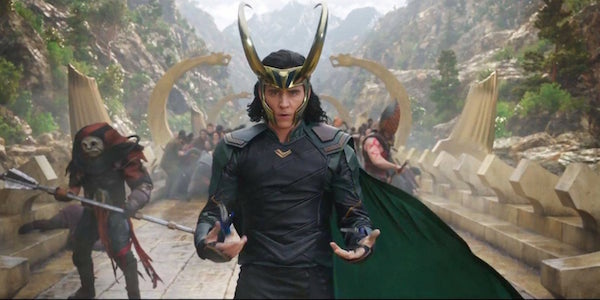
Loki on bridge Thor: Ragnarok

One of the strongest criticisms of the MCU for a long time was that it had a villain problem. Despite producing iconic heroes left and right, Marvel Studios could never quite create a memorable villain. During the early phases of the MCU, the notable exception was Loki, who would be labeled as Marvel's best villain before he finally got some competition. Apparently, Marvel knew early on that it had to nail Loki, and executives told Thor screenwriter Zack Stentz that his top priority was making Loki as good a villain as Magneto.


Way back in the early days of of the MCU, Marvel Studios knew that it was building up to The Avengers. As such, studio execs had the idea that Loki would the villain of that film, but they were also aware that they weren't super great with making good villains. Iron Monger, Whiplash, and the Abomination were forgotten as soon as people left the theater.


So, if Loki had to be their Big Bad of Phase One, they needed to get it right. Here's what the studio told Zack Stentz when he was writing the screenplay for Thor.


It's a complicated issue because we had a very clear mandate when we were writing Thor. They already knew that they were building towards The Avengers and they already had the notion that Loki was going to be the villain. They knew that their villains thus far in the MCU had been a bit underwhelming, and they said -- one of the executives literally said, 'Look, if you fail at everything else, give us a villain as good as Magneto in Loki.' We need someone at that level because that’s going to be our villain for The Avengers.


Back in 2011, The Dark Knight's Joker was the villain to beat, but before that film came along, Magneto was probably the best modern day comic book movie villain. He appeared in every X-Men movie, he had cool powers, and the audience could sympathize with his rationale because of his sad backstory.


Loki certainly has the audience's sympathy. Zack Stentz told The Fanboy Podcast that while writing the character, he knew that one of the most important things for making Loki a great villain is that he had to be relatable.


We always put a lot of effort into our villains, but in this case we really worked hard giving Loki an interesting story and making him sympathetic at the same time as he's doing these terrible things.


I would say that Zack Stentz and his fellow Thor writers certainly gave Marvel what they wanted. Loki went on to become a huge hit with fans, and even after all these years he's still in the Top Five of MCU villains. Of course, a lot of the credit also goes to Tom Hiddleston for his performance as the character.


Loki's movie future was made unclear by Avengers: Endgame, but the character will be the star of his very own mini-series on Disney+, which doesn't have a release date yet. Magneto, currently played by Michael Fassbender, will be seen on screen again soon in Dark Phoenix, which opens in theaters July 7.


This Rotten Week: Predicting Shazam!, Pet Sematary, And The Best Of Enemies Reviews

This Rotten Week: Predicting Shazam!, Pet Sematary, And The Best Of Enemies Reviews
Freddy and Shazam together in Shazam!

As we make our way into the fourth month of the year, we have a wide variety of features going into wide release. This week we have another big superhero blockbuster, terrifying burial ground, and a civil rights story. Get ready for Shazam!, Pet Sematary, and The Best Of Enemies.


Just remember, I'm not reviewing these movies, but rather predicting where they'll end up on the Tomatometer. Let's take a look at This Rotten Week has to offer.


Most superhero stories are geared toward a young man’s fantasy. Get super powers, overcome obstacles, save the world. It’s a pretty standard formula. And then sometimes you get a story in which the hero IS a kid who can transform into an adult with the super powers. That’s the fantasy cranked up another notch. Such is the case with Shazam! in which young Billy Batson must merely yell out the titular word and become a Superman-like hero. How he explores these new powers (with all of their ups and downs) is the theme of this latest addition to the DC Universe. It looks pretty great.


After stumbling out of the gate, the DC Universe is making something of a comeback. Three of their last four movies - Wonder Woman (93%), Aquaman (65%) and now Shazam! - have scored well with critics. Only the absolute mess of Justice League (40%) sandwiched in there was a stumbling block. Critics are really taking to this latest offering, appreciating the candid nature of the story and the fun-loving tone.


Don’t let the comical misspelling of “Cemetery” fool you. There’s nothing funny about Stephen King’s story of an ancient burial ground that can revive the dead and turn the reanimated bodies into all-encompassing evil. Such is the case with Pet Sematary, in which the Creed family makes the bad mistake of buying a new house that just happens to have serious evil in the backyard.


Stephen King’s classics still hold up as horror fare, evidenced by the remake of IT (85%) two years ago. His storytelling and high concept plots translate well to the big screen and this latest fits the bill as well. Early sentiments are overwhelmingly positive with the Tomatometer sitting at 85% through more than 40 reviews. I don't think it drops all that much over the course of the week but it will just a bit. Pet Sematary looks creepy as hell and critics seem to enjoy the ride.


Based on a true story, Best of Enemies centers around the desegregation movement and the relationship between a Ku Klux Klan leader and an African-American civil rights activist - clashing over a local school system in the early 1970s. From an historical perspective, this flick looks like it hits all of the right notes without ever getting into the nitty-gritty. My fear with this kind of film is, in an effort to make it mass appeal to a large audience, the tone becomes more comedic/melodramatic rather than what was found in reality.


I don't think it looks bad, but rather a movie that doesn't really want to offend anyone. And I think the critics see it for that and the score doesn't quite get to "Fresh" status.


The Rotten Watch went one for two last week with The Beach Bum (Predicted: 47% Actual: 52%) falling within my range of succes. Harmony Korine’s story of Matthew McConaughey doing something like a career-achievement role as a stoner author living through a psychedelic background didn't land with the whole crowd. Moondog and his exploits weren't for everyone, and critics were basically split it right down the middle.


Coming in with some rather high expectations, Dumbo (Predicted: 67% Actual: 50%) ended up being a disappointment for Tim Burton and company. Despite the hype around the live action remake, critics weren't over the moon with the result, mostly agreeing it was a big time missed opportunity considering the source material. It finished right down the middle with both the positive and negative reviews carrying mostly the same theme. Most say it was underwhelming across the board.


Next time around we’ve got After, Hellboy, Little and Missing Link. It’s gonna be a Rotten Week!


It’s A Challenge Getting John Wick 3’s Weapons To International Shooting Locations

It’s A Challenge Getting John Wick 3’s Weapons To International Shooting Locations
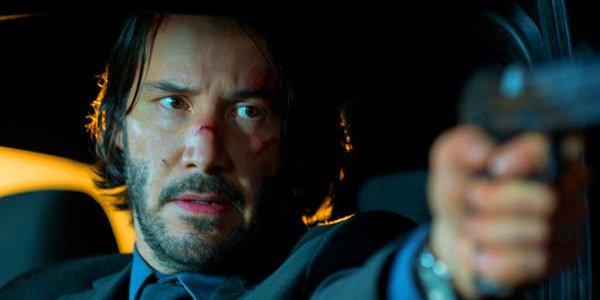
Keanu Reeves as John Wick

The John Wick movies are full of highly stylized and choreographed violence. That's why we love them. The action is a beautiful thing to behold as are the locations where that action takes place. John Wick franchise director Chad Stahelski says that shooting on location is important to him, but doing so isn't always easy, because it frequently means trying to explain why you're trying to bring a truckload of guns into a foreign country. In the case of the upcoming John Wick: Chapter 3 - Parabellum, that meant explaining to the nation of Morocco why they needed so many guns in order to be allowed to film there in the first place. As the director explains...


We had a truckload of [modified for filming] firearms that we were bringing into another country. That doesn’t guarantee you an invitation. You have to really explain it.


If the guns were all modified for filming then they likely couldn't actually function as real guns, but that likely isn't enough to impress officials when they see all the, otherwise, real weapons, you want to bring into their country. Sure, you're making a movie, but do you really need that many guns?


Well, it is a John Wick movie, so...yeah.


While the first John Wick movie stayed in New York, the second film took the story, and the title character, to Italy. For Chapter 3, John Wick will travel to the Sahara Desert. The production filmed the scenes in Morocco. Director Chad Stahelski tells THR his desire to film on location comes from a love of classic action movies like the work of Steve McQueen and early James Bond films, which always filmed on location. While these days you can take a movie anywhere in the universe with a green screen big enough, Stahelski still sees value in filming on location, but it does come with its own set of hurdles.


How much of John Wick 3 will take place in Morocco isn't clear. Chapter 2 had a strong opening that took place in Italy before the bulk of the action returned to New York. We know that the new film will open in New York, with Wick on the run from every assassin looking to cash in on his bounty, but he'll find himself in the desert looking for help from Sofia, another assassin played by Halle Berry.


While getting all those weapons into Morocco for filming might have required a bit of extra work, I feel confident that it will all be worth it. The John Wick series has created some of the most memorable action sequences of any recent films and whatever it was that led the production to film in the desert, we can be confident that the location for used to its fullest potential.


John Wick: Chapter 3 - Parabellum hits theaters May 17.


Why Horror Directors Make Great Superhero Films, According To David Sandberg

Why Horror Directors Make Great Superhero Films, According To David Sandberg
Shazam Zachary Levi looking confused in the mist

There’s a pattern that seems to be forming in the DC Comics film canon, and it’s something that stretches all the way back to Superman: The Movie. As it turns out, some of their biggest ticket directors in the comic realm have backgrounds in horror filmmaking, with Richard Donner and Tim Burton putting in strong efforts in earlier ages, and now Aquaman’s James Wan and Shazam! director David Sandberg getting to continue the precedent in the modern age. All of this builds a case for one pretty awesome conclusion: horror directors are fantastic hires when you want to make a superhero movie.


It’s something that feels right to say after seeing Shazam!, as the mix of superpowered mythos, a heartwarming foster family, and some pretty creepy stuff involving the Seven Deadly Sins all come into frame. While the film is more than likely ok for your kids to see, there’s still some material that might creep them out, as part of the character’s underlying story is the fight of virtue versus evil, with seven figures representing each side of the fight.


While sitting down with CinemaBlend, David F. Sandberg, half of the pair behind the redemption of the Annabelle series with Annabelle: Creation, talked about how the hypothesis of horror directors being particularly adept at the superhero genre could be supported because of the following reason:


Maybe, I mean it takes a lot of work to get horror right. Like a lot of filmmaking skills that all needs to sort of come together. That, I guess, prepares you for other genres as well.


Consider all of the effort that goes into a film like Annabelle: Creation: there’s a lot of effects work, maintenance of the balance of tone and scale, and most importantly, the efforts to make sure the personal story of the characters don’t get lost in the more fantastical pieces of the film’s story. Those are all of the same factors that apply with any comic book movie you can think of.


Spinning all of those plates isn’t easy, and it’s certainly not impossible for a director or writer to pick up on. But if you’re someone like David F. Sandberg, or the many other horror professionals who have jumped from scares to super powers, having experience with the latter helps immensely when you try to tackle the former.


It’s even more amazing when you think about how Sandberg’s previous film, the first sequel in the Annabelle series, operates on a very similar track as Shazam! Both films, at their heart, are tales of orphans who bond through a series of extraordinary events, with one eventually being embued with a special connection to powers greater than themselves. Except while Annabelle: Creation progressed with a more insidious aim at its core and resulted in quite a few fatalities, Shazam! opts for a more friendly and much less scary way of doing things.


Another person who could appreciate the parallels between David F. Sandberg’s theory of why horror directors work particularly well in a superhero project is producer Peter Safran, another teammate from the Annabelle: Creation side of things. Adding some further praise to the efforts that Sandberg had made with Shazam!, Safran said the following:


I think horror filmmakers don’t really get the due that they deserve, in terms of the quality of filmmakers that they actually are. And we’ve found with James Wan, and now with [David F.] Sandberg that these guys can make the jump into the superhero genre really, really well.


Though the deeper historical context of horror directors in the world of superhero films certainly wasn’t lost on David F. Sandberg or Peter Safran, as you’ll be able to see below in the clip from our sitdown at the Shazam! junket.


There’s a lot of moving pieces that go together to make a film like Shazam! work, and thanks to the expertise of Mr. Sandberg, the finished product works as beautifully as it does.


Shazam! is in theaters now. Just say the magic word and use your favorite ticketing app, and you’re there! But if you’ve already seen the film, take a look at our discussion about the end credits scene, and what it means for the series. Also, don’t forget to listen to our ReelBlend interview with Sandberg and Safran, if you’re curious to hear more from the pair. It looks like there’s plenty more fun where this came from.