Annabelle Comes Home Is Definitely Not A Horror Comedy, But It Will Have Funny Moments

Annabelle Comes Home Is Definitely Not A Horror Comedy, But It Will Have Funny Moments
Annabelle Comes Home announcement poster

The horror movies of The Conjuring Universe definitely take themselves seriously. Sure, there are the occasional laughs featured in the six features we’ve seen thus far, but they are pretty few and far between, as the focus has clearly always been primarily on scares. This is a tradition that fans can expect to see continue soon in the upcoming Annabelle Comes Home, but according to writer/director Gary Dauberman, you may find yourself chuckling while watching the movie a bit more than you did with previous chapters in this franchise.


The tone of Annabelle Comes Homes was a subject that came up during an interview with Dauberman on the set of the film when it was in production late last year, and in discussing his approach the filmmaker revealed that the new release will be a bit different than the previous two Annabelle features (both of which he wrote). While he stressed that there will never be a point in the movie where a comedic beat is given preference over a scare, there are going to be some laughs mixed in with the screams during the experience:


I'm not a huge fan of horror comedies, but I love comedy in my horror – if that makes sense. I like moments of levity, so I'm leaning into that a little bit more on certain moments, because I find if we hit the moments where people laugh, and then they get scared right away… I like trying to land that. I've been playing around with that a little bit more.


It’s an interesting direction to take, and arguably a smart one. While it’s definitely true that too much comedy can undercut the more frightening aspects of a horror film, striking a proper balance can work wonders. After all, making an audience smile with a joke or silly situation can lure them into a false sense of security, and when their guard is down a proper scare can result in shrieks, spilled soda, and flung popcorn.


Furthermore, a proper application of laughs interspersed with shocks does wonders for the ride-like experience that a great horror movie can offer. Those are two emotions on opposite ends of the spectrum, and it can be a blast for crowds to constantly bounce back and forth between those extremes. A recent example of a film that did that brilliantly was Andres Muschietti’s IT – which Gary Dauberman also wrote.


Part of what allows Gary Dauberman to take this approach with Annabelle Comes Home is that the plot offers circumstances that make the laughs natural – something that he didn’t really have in the making of Annabelle or Annabelle: Creation. Specifically, there is a classic horror set up here, with the story centering on young Judy Warren (McKenna Grace) as she spends the night with a babysitter (Madison Iseman) and her babysitter’s best friend (Katie Sarife) in a house that starts to go a bit nuts thanks to the presence of Annabelle. As Dauberman explained, the personalities of the girls allowed him to try some lighter tones with the plot, while never breaking too far from the larger tone of The Conjuring Universe movies. Said the writer/director,


That just fits the girls too because they're just so upbeat. It’s that sort of the teenagers alone in the house thing we're trying to capture too. It's been a lot of... We're not going ‘outside the box’ on this one, but I think we're trying to get a couple more moments of levity that maybe weren't there in the first and second one. I mean, there were moments of levity, but a little bit more of that sprinkled in.


Annabelle Comes Home, which features the return of Patrick Wilson and Vera Farmiga as Ed and Loraine Warren, will be hitting theaters everywhere as a big summer release this year – scheduled to go nationwide on June 28th. It’s one of our most anticipated releases of the season, so you can be sure that we’ll have a lot more for you to read about it here on CinemaBlend between now and when it comes out.


Disney's Bob Iger Is Taking A Major Pay Cut Ahead Of Fox Merger

Disney's Bob Iger Is Taking A Major Pay Cut Ahead Of Fox Merger
The Disney logo

Among the many things Mickey has in store for his Thanos-like quest for universal domination in 2019 is the closure of Disney’s purchase of 21st Century Fox. Pending any unforeseen complications, all signs point towards that deal closing sometime this year. With that merger looming, the head of the Mouse House, Disney CEO and Chairman Bob Iger, is taking a major pay cut.


Disney has adjusted Bob Iger’s compensation in a way that drastically reduces the potential pay he would have made upon the closing of the Fox deal, according to Deadline. A $500,000 annual increase has been eliminated and Bob Iger’s base salary will remain at $3 million. Also being cut is an annual $8 million increase in Iger’s annual target bonus. That potential bonus will remain at $12 million.


A long-term incentive award for the chairman has also been reduced by $5 million a year from $25 million to $20 million. Factoring in all the cuts and reductions to bonuses, Bob Iger’s potential annual pay will be reduced by up to $13.5 million. In a statement Bob Iger seemed to indicate that the reduction in his pay was a decision that he and the company came to together. He said:


I am proud to be leading The Walt Disney Company through this important time and believe the changes I, with the Board, have made are in the best interest of the company.


It seems that this pay cut was the result of mutual decision made between the CEO and Disney’s board to better position Disney for success and profitability for shareholders during this transitional period when the company has so much going on.


I think we can all agree that $13.5 million is no small amount to lose out on, but try not to feel too bad for Bob Iger. He is still one of the highest-paid executives in the industry. He made $65.7 million in 2018, an 80% increase over 2017. That included a stock grant that was an incentive for him to stay with Disney until 2021, beyond his planned retirement date to help shepherd the company through the Fox deal.


Bob Iger also received a stock award as a part of the Fox deal, valued at $35.35 million with the potential to increase to as high as $149.6 million when the deal closes and if the company performs.


Although no specific reasoning was given for Bob Iger’s reduced compensation in Disney’s SEC filing, in the company’s annual shareholder meeting last year, a majority of shareholders voted against Disney’s plan for executive compensation. At the time, the board said that it would take the vote under advisement for future decisions about CEO compensation, according to CNBC. This move comes in advance of Disney’s next annual shareholder meeting, which will be held on March 7.


Reduced pay or not, this is a big year for Bob Iger and Disney, and one that could cement the former’s legacy and set up the latter’s future for years to come. The $71.3 billion purchase of 21st Century Fox expected to close in the first half of the year, thus changing the entertainment landscape and giving Disney even more firepower at the box office. 2019 will also see the launch of the Disney+ streaming service and the addition of Star Wars: Galaxy’s Edge to Disney’s theme parks, not to mention the slew of massive Disney movies headed to theaters.


Check out our 2019 release schedule to keep track of all of this year’s biggest movies.


Why Will Smith Almost Said ‘No’ To The Live-Action Aladdin

Why Will Smith Almost Said ‘No’ To The Live-Action Aladdin
The Genie

Will Smith may be a desperado, but he isn’t desperate for roles. In fact, when he was presented with the idea of playing the Genie in Guy Ritchie’s Aladdin, out this weekend, the actor’s first impulse was to say no.


Why would an a-lister say no to a role in a big Disney live action adaptation? Well, Robin Williams’ original performance in 1992’s Aladdin was one of the most iconic of all-time, and Will Smith didn’t originally think he could bring anything new to the table. He told Ellen DeGeneres this week:


I was like, ‘Naw, man. No, Robin Williams like smashed that thing.’ You have to be careful stepping into projects like that. At first I looked at it… he revolutionized what you could do in these kinds of movies. I was listening and listening. I didn’t think I wanted to touch it. Then, I started playing with the music and the music was where I found my “in” to the genie.


While Will Smith initially felt he would have to pass on Aladdin, he did tinker around with the idea for a bit. He revealed on Ellen that when he went into the studio and spent some time toying around with the iconic song ‘Friend like Me’ he realized he could be the right fit for the big, blue genie.


Per the actor, the real flash of inspiration was when Will Smith realized he could bring in his Fresh Prince of Bel-Air character's characteristics and bring some hip-hop flavor to the role. He also said:


‘Friend like Me’ was the first song that I messed with in the studio and then I found that sort of hip-hop flavor. What Robin did was took his stand up and used his standup persona. I was like, ‘Oh, I could just use my Fresh Prince persona because the Genie has been forward and back in time. You can pull references from anywhere. I mirrored that, and the hip hop in was where I saw I could put my own signature while maintaining the nostalgic value.


Nostalgia is a big thing in Disney’s 2019 live-action Aladdin. Without giving too much away, the movie mirrors a lot of the iconic classic’s most memorable moments. However, it also spins the tale in a new way, with characters like Jasmine gaining agency and characters like the Genie adding a different flavor into the mix. In fact, 'Friend Like Me' has been a big entry point for Will Smith to engage with fans of the franchise as well.


Reviews are out for Aladdin now, and while not everyone loved the movie, reviews for the upcoming live action flick have generally been positive, and Will Smith has been well-liked, despite initial backlash against his version of the genie.


Whoever took on the role of the genie was always going to have to deal with being compared to Robin Williams, who would be a tough act for anyone to follow. Honestly, the role really needed to go to someone splashy with a big name in order to work, and we're lucky Will Smith said yes after much deliberation. If the Guy Ritchie flick had cast a no-name, I'm not sure that person would have been able to pull it off.


Aladdin hits theaters this Friday. For a full look at the summer movies coming up, check out our movies schedule.


Iron Man 3 Star Reveals What Harley Was Thinking In Avengers: Endgame Funeral Scene

Iron Man 3 Star Reveals What Harley Was Thinking In Avengers: Endgame Funeral Scene
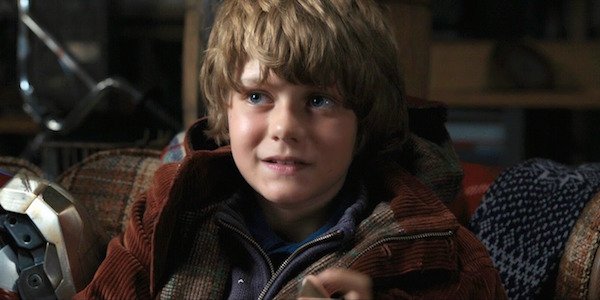
Iron Man 3 Harley Keener

Almost every MCU character that you can think of appears in Avengers: Endgame, and perhaps the most star-studded moment in the film is the funeral scene. Just about anybody who's anybody attends Tony Stark's funeral, but the one outlier is Harley Keener, aka The Kid From Iron Man 3. Ty Simpkins reprised his role for the scene, which was a momentous occasion for the actor, who took his real-life love of Iron Man and used it to fuel his acting.


Audience members were likely surprised to see Harley in the funeral scene, but even Ty Simpkins was surprised to get the call. He recently talked about the moment he first got wind he was in consideration to appear in Endgame, and how Iron Man meant so much to him as a kid.


I was about to do an audition and my manager at the time called me and he said they were thinking about putting me in, and I was screaming so much in the car with my mom. My mom is like, 'What? What is it?' And I just didn’t tell her because it wasn’t confirmed. I didn’t want to jinx it or anything. [...] I got the call when I was waiting to go to baseball practice that they were confirming it, and I just remember — because they told me what the scene was about — tearing up and just feeling so nostalgic about everything. ... Iron Man [was] probably one of the first movies I saw in theaters. I was 6, sat in the front row and I was just looking up, and that’s all I can remember. Iron Man was so inspirational and just meant so much to me. That’s how I felt.


Originally, The Russo Bros. were concerned about having older teen Harley appear in that scene because barely anyone in the test audiences knew who he was. However, the directors figured that easter eggs like this were half the fun of the MCU and kept Harley in the scene. That's obviously good news for Ty Simpkins. He told HuffPost what filming the scene was like and what Harley was thinking about during the funeral.


I didn’t get a script, but [the directors] came up to me and were like just think about what Tony meant to you and how he impacted your character’s life and your life. So I just thought about what I said earlier, how Iron Man is very sentimental to me and how he felt to Harley. I imagine Tony was really Harley’s only father figure and that they would’ve stayed in touch over the years. I just kind of took that sentimental part of my real life and Harley’s life into the scene.


Ty Simpkins, now 17, said he and Robert Downey Jr. have kept in touch over the years, and they texted after it was revealed that Ty would be part of Endgame, so it felt nice to be included again for RDJ's final goodbye.


Ultimately, Harley does feel like a pretty random inclusion for the scene, seeing as how he has never been mentioned once since he debuted in Iron Man 3. This has led some fans to speculate that Marvel is setting Harley up for future appearances, possibly as a new Iron Man-type hero or being in a Young Avengers-style team-up movie. Here's what Ty Simpkins had to say about that possibility:


I mean, I’d love that. I have no idea if it would happen, but I love that.


I'm not sure what the future holds for Harley in the MCU, but stick with CinemaBlend and we will keep you updated.


Boyz N The Hood Director John Singleton Is Dead At 51

Boyz N The Hood Director John Singleton Is Dead At 51
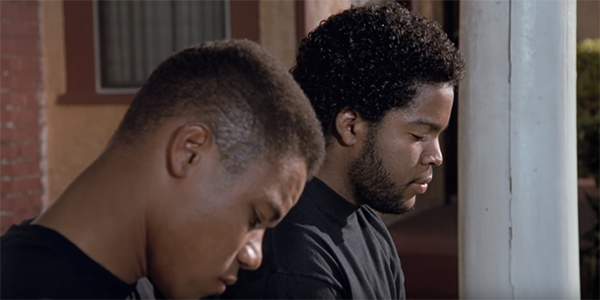
Boyz n the Hood

After suffering a stroke while in the hospital, writer and director John Singleton was put on life support and had been in the ICU. Now, after he was taken off life support, it is being reported that John Singleton has died at the age of 51.


In the middle of April, news broke that John Singleton had suffered a major stroke, and his family said that he was receiving great medical care. Although the full seriousness of his condition was not immediately apparent, the filmmaker had been in the ICU at Cedars-Sinai hospital in Los Angeles ever since.


On Monday, in a statement to Deadline, a spokesperson for John Singleton’s family announced the difficult decision to take him off of life support. The statement read in part:


It is with heavy hearts we announce that our beloved son, father and friend, John Daniel Singleton will be taken off of life support today. This was an agonizing decision, one that our family made, over a number of days, with the careful counsel of John’s doctors.


The writer and director had long struggled with hypertension (high blood pressure), and in the statement, his family also urged everyone to watch for and recognize the symptoms of this condition by consulting Heart.org. The family also thanked everyone who showed their love and offered their prayers for John Singleton during this time.


Born on January 6, 1968 in South Central Los Angeles, John Singleton had a love for film from an early age. A graduate of USC’s storied School of Cinematic Arts, John Singleton broke out in Hollywood in 1991 with his first feature film, Boyz N the Hood. That urban drama, which was shot in South Central Los Angeles where Singleton grew up, netted the writer and director major acclaim, launching his career.


For his debut film, John Singleton was nominated for Best Director at the Academy Awards, making him the first African-American nominated for the award and the youngest nominee ever at just 24 years of age. Boyz N the Hood also earned John Singleton an Oscar nomination for Best Original Screenplay.


John Singleton continued to make a name for himself with dramas like Poetic Justice, which starred the late Tupac Shakur, as well as Higher Learning and Rosewood. He also put his stamp on one of cinema’s biggest franchises with 2 Fast 2 Furious, teaming up again with Tyrese Gibson following their time together on Baby Boy.


Other notable titles in John Singleton’s filmography are 2000’s Shaft, starring Samuel L. Jackson, and the crime drama Four Brothers. In recent years, John Singleton has directed several one-off episodes of popular TV shows like Empire, American Crime Story and Billions. In addition to those directorial efforts, John Singleton co-created and executive produced the FX drama series Snowfall, which is expected to premiere its third season later this year.


John Singleton was a trailblazer who helped kick open doors for African-American filmmakers that were long closed (Spike Lee was snubbed for a Best Director nom for Do the Right Thing two year prior to Singleton’s nomination). He brought the kinds of stories that many audiences were unfamiliar with to life in a way that was raw and entertaining and that cemented his place in cinematic history.


John Singleton loved film, sailing and his family. He is survived by his mother and father and his seven children.


CinemaBlend sends our thoughts and condolences to John Singleton’s family and friends in their time of mourning.


Shazam's Editor Reveals The Scene That Was The Toughest To Get Right

Shazam's Editor Reveals The Scene That Was The Toughest To Get Right
Zachary Levi as Shazam

Warning: SPOILERS for Shazam! are ahead!


As one expects from a superhero movie, Shazam! was packed with a lot of action-packed moments, all of which came with their own unique challenges to pull off. As a result, just because a scene or sequence was envisioned in a particular way on script or while shooting doesn’t mean it came together looking exactly like that when finally assembled.


One of those sequences was the final battle between the eponymous protagonist and the Seven Deadly Sins-powered Doctor Sivana, which led to Billy sharing his power with his adoptive siblings so they too could become adult superheroes. I learned this when I recently spoke with the editor of Shazam!, Michel Aller, as this was her response when I asked what scenes changed the most from how they were initially shot to how they were edited together:


The end battle, really, was the biggest one that evolved. It had so many moving pieces that we had to work with and figure out, showing these new characters, the adult family, and giving them enough screen time, and still having the screen time between Sivana and Shazam. That end sequence, I wouldn’t say it’s just one scene, but the whole end battle was the one evolved the most.


There’s definitely a lot going on in that final Shazam! battle. It would be one thing if it had just been a straightforward fight between Shazam and Sivana, but not only did Mary, Freddy, Eugene, Darla and Pedro joining the fray widen the scope, but there was also the fact that the Seven Deadly Sins were able to separate from Sivana and go their own ways. So there were numerous things to keep track of within that carnival battleground.


As a result, not only was the final Shazam! battle the sequence that evolved the most during the editing phase, it was also the hardest one to cut together. In Michel Aller’s words:


It was probably the hardest, because you want to balance all these characters, telling everyone what’s going on, where they’re at, and keeping them interested and keeping the story moving forward. It was definitely the end battle. You have a lot of moving pieces to work with.


Even with all those moving pieces to track, ultimately the battle culminated with the showdown between Shazam and Sivana, adversaries that have been fighting on the printed page and in other media for eight decades. Remembering that main antagonist loses his powers if all of the Sins are out of his body, the superpowered Billy Batson managed to goad Envy out of Sivana, leaving the chrome-domed baddy helpless. Upon taking the Eye of Sin from Sivana, Billy imprisoned all of the Sins back within it, and the Shazam family redeposited the artifact back at the Rock of Eternity.


While this sequence had to go into the Shazam! final cut no matter what, there were 20-24 minutes of scenes that were taken out. However, Michel Aller expects you’ll be able to watch most of these when Shazam! comes out on Blu-ray and DVD later this year, with some of these excised scenes possibly including one where Mary confronts Billy as he’s sneaking out of the Vasquez house and the original version of Sivana’s murder spree. For now, catch Shazam! in theaters while you can, as the next DCEU movie isn’t coming out until next February (although Joker is holding down the overall DC fort in October).


Be sure to read CinemaBlend’s review of Shazam! and stay tuned for updates on how Shazam! 2 is coming along. Those of you interested in learning what other DC movies are in development can find that information in our handy guide, or you can look through our 2019 release schedule to plan when you’ll be going to the movie theater later this year.


How The Child's Play Reboot is A 'Greek Tragedy' For Chucky

How The Child's Play Reboot is A 'Greek Tragedy' For Chucky
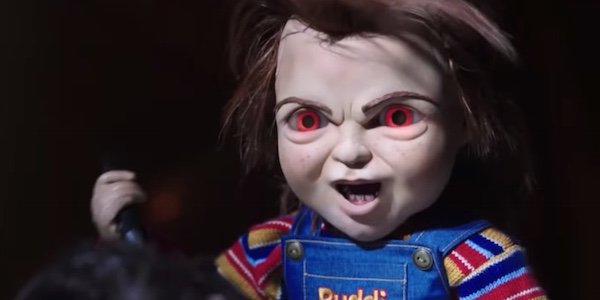
Chucky

This summer, movie fans will be reunited with a beloved toy-based franchise: Childs' Play, which coincidentally comes out on the same day as Toy Story 4. The horror movie reboot will be changing a few key traits of the murderous Chucky, such as making him a twisted AI, but this brings some depth to the character, according to director Lars Klevberg. In fact, the director sees this reboot as a Greek tragedy for what Chucky goes through in the film.


If you are a fan of the original Child's Play movies, then you've likely noticed that the reboot has gone off script a bit. Rather than having Chucky be a serial killer who used voodoo to transfer his soul into the body of a doll, the reboot's version is an AI that goes bad.


It's certainly less complicated and maybe less fun, but this gave the reboot a chance to make a more sympathetic Chucky who changes over the course of the film. Director Lars Klevberg told Collider that in this way, the story becomes more tragic for Chucky.


When I read the script, one of the first things I recognized was that Chucky was a great character in terms of that he changed. He had his motivations, and it came through his interaction with humans. His way of becoming sympathetic – that was something I really wanted to look into. I viewed the story as a Greek tragedy [for] Chucky… So Chucky having different emotions in this film was important to me.


The jury is still out on whether the story is as tragic for the people that Chucky is definitely murdering.


However, despite the fact that Chucky will become close friends with a knife before the end of the movie, the character will go through numerous changes to reach that point. Whereas in the original films he was always crazy, the new Child's Play will show how the AI reaches its murderous conclusions.


[Chucky’s] motivation is understandable from his point of view but also to us. We can understand why he’s behaving like that. If you understand the antagonist and his motivations, then you can identify with him. That’s why Mary Shelly’s Frankenstein is one of my key inspirations… [How Chucky questions] his purpose once he starts to understand from us human beings.


The Child's Play series has always undergone changes from movie to movie. The original was a straight-up horror film before later sequels become more comedy-driven. Making Chucky more sympathetic sounds like it could round him out as a villain and while the end result (him trying to murder everyone) is probably the same, it might make for a better ride.


The Child's Play reboot is all set to hit theaters on June 21. For everything else hitting theaters, check out our 2019 movie release guide.